

AI999X Scientific Models
Collection
All 31 AI999X scientific models: offline solvers with exact, step-by-step answers across 7 fields (2,696 capabilities). • 31 items • Updated
Optimization covers linear and integer programming, convex and nonlinear optimisation, assignment, transportation and shortest-route problems, scheduling, inventory, queueing, game theory and multi-criteria decisions: 73 calculations in 16 topics, each with its formula, its steps and its units, and a plain reason instead of a number when an input is missing or out of range. One compiled engine, four ways to use it: the desktop app, the command line, the browser and Python. Everything runs on your own computer, offline.
| Desktop app (Windows, Linux) | Windows · Linux |
Command line optimization (Windows, Linux) |
Windows · Linux |
| Browser (any device) | Try it on the model page |
| Python 3.10+ | pip install optimization-ai999x: on Windows and Linux (x86-64) pip installs the same compiled engine; on other systems (macOS, ARM) it installs a pure-Python build that gives the same answers |
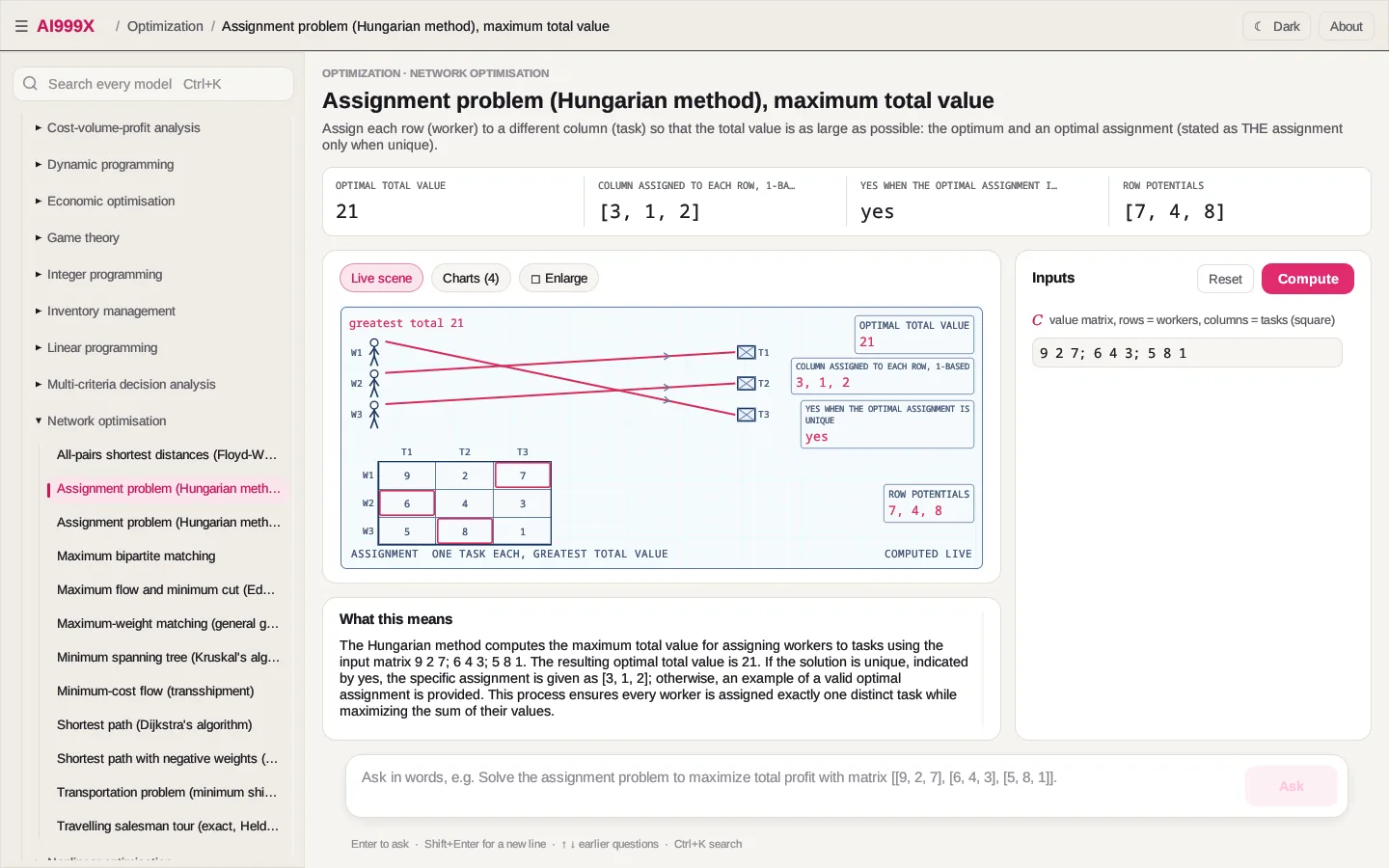
From the Optimization desktop app: every scene and chart is drawn from the computed answer.
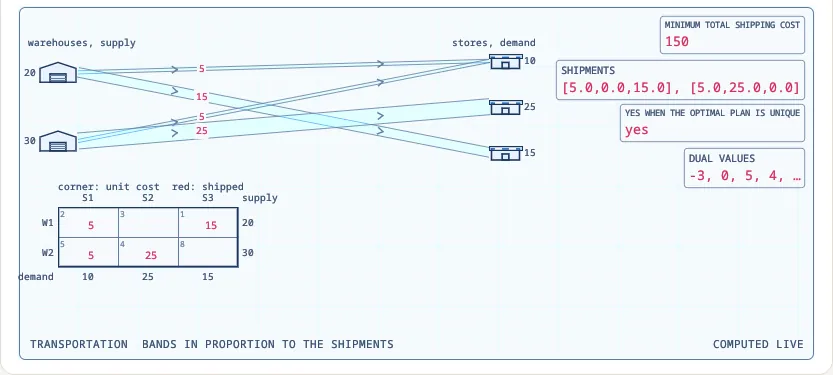 Transportation problem (minimum shipping cost) |
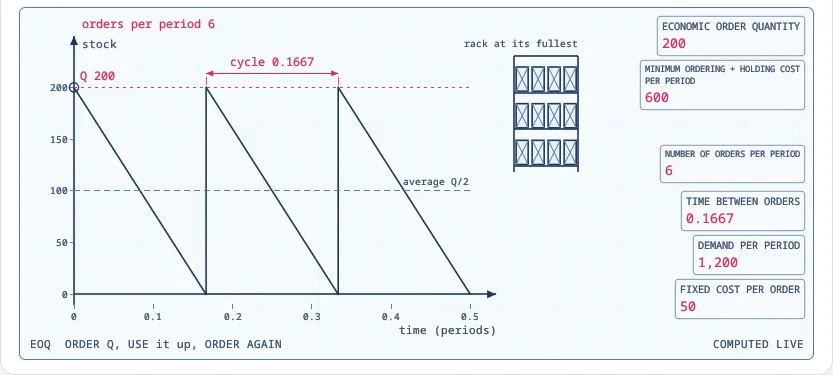 Economic order quantity (EOQ) |
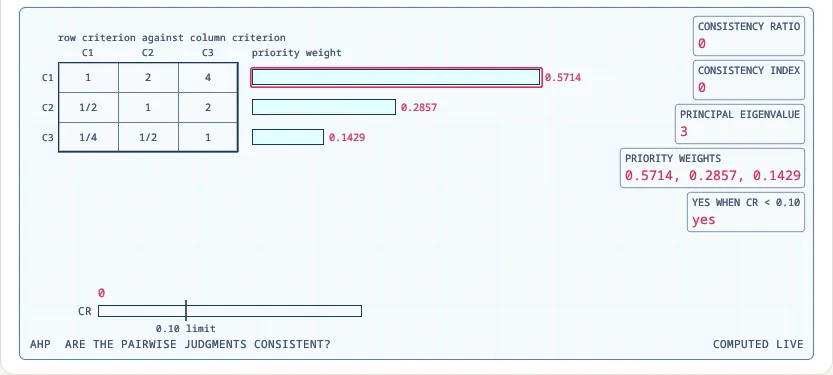 AHP consistency ratio |
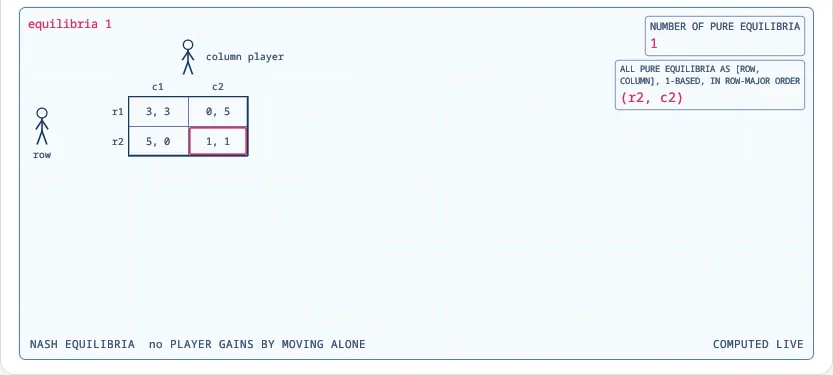 Pure-strategy Nash equilibria of a bimatrix game |
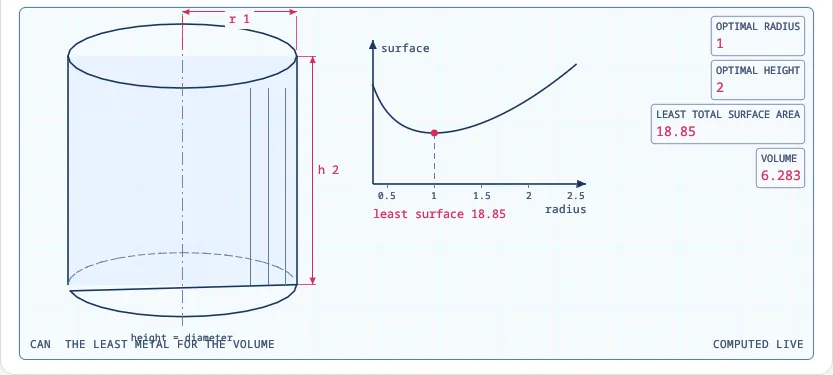 Closed cylinder of least surface area for a given volume |
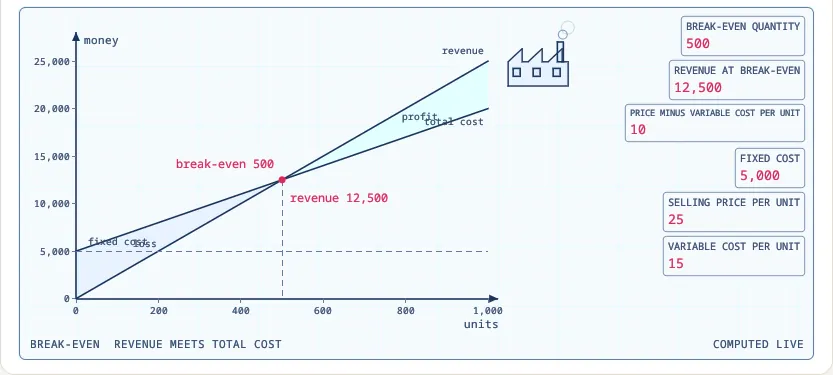 Break-even quantity |
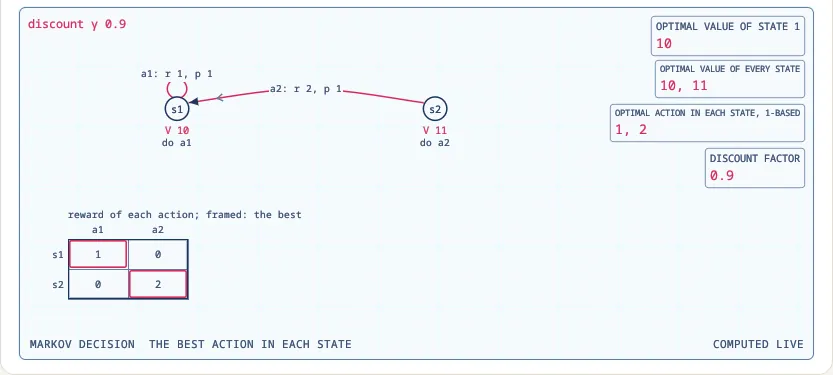 Discounted Markov decision process (optimal values and policy) |
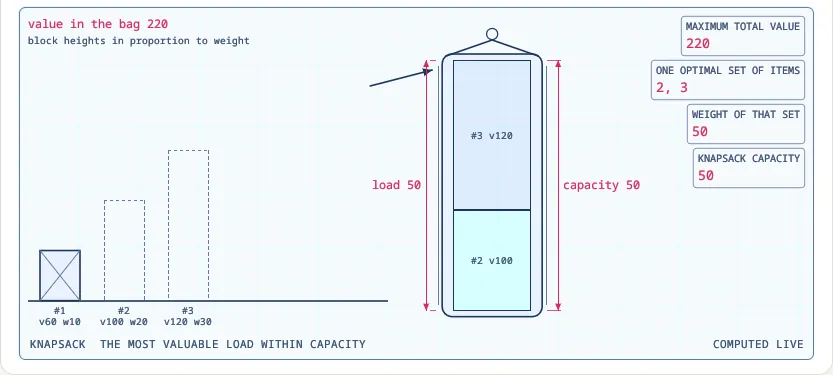 0/1 knapsack problem |
Charts:
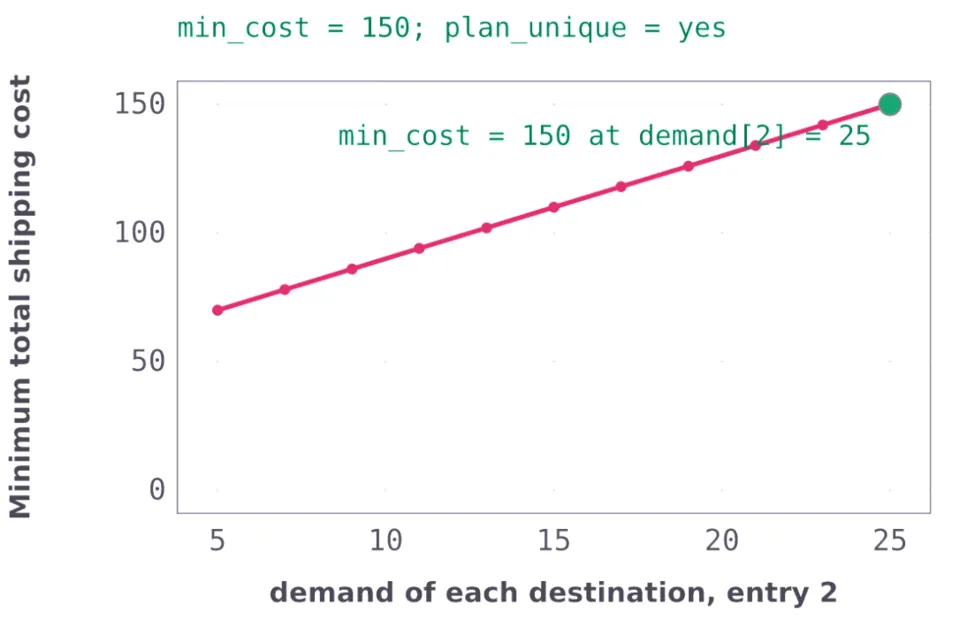 Transportation problem (minimum shipping cost) |
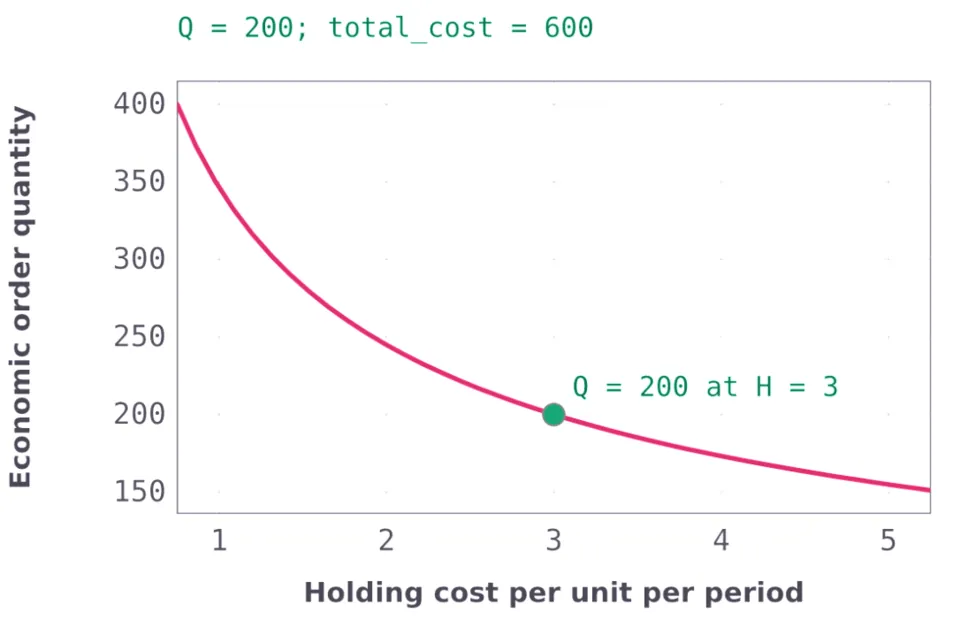 Economic order quantity (EOQ) |
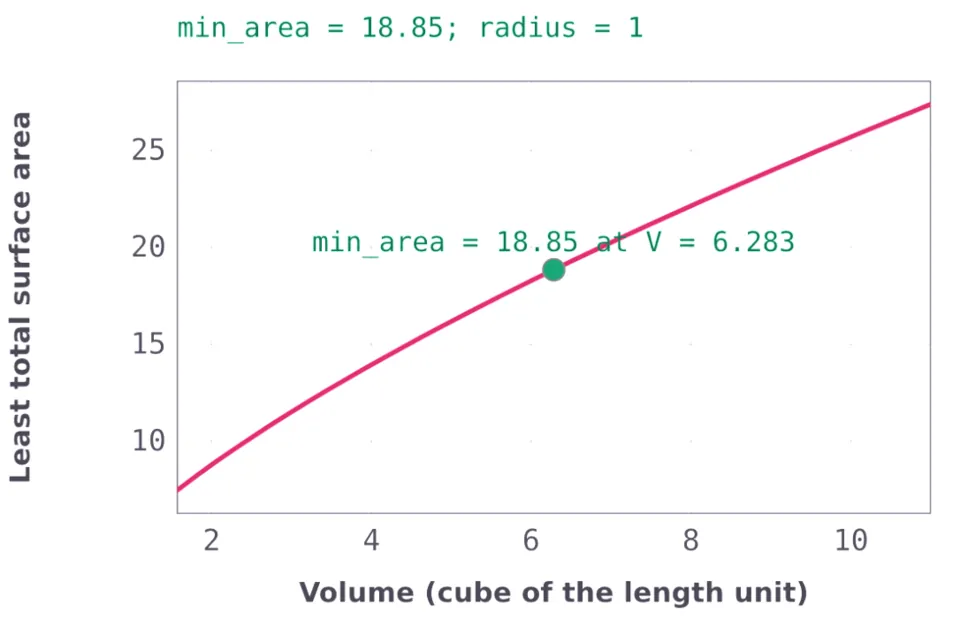 Closed cylinder of least surface area for a given volume |
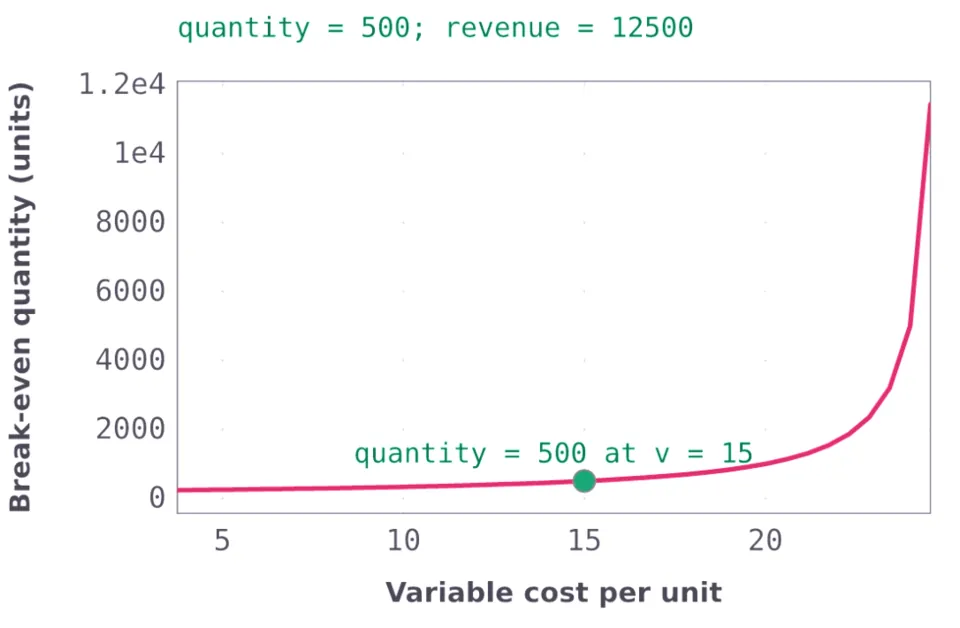 Break-even quantity |
Each question below was asked on this release; the comment under it is the line it printed.
import optimization_ai999x as optimization

a = optimization.ask(
    "The demand is p = 100 - 2q and the cost is C = 300 + 20q. Find "
    "the profit-maximizing quantity."
)
print(a.outcome, a.values)
# SOLVED {'quantity': 20.0, 'price': 60.0, 'profit': 500.0}

a = optimization.ask(
    "Littlewood's rule: the full fare is 400 and the discount fare is "
    "150; full-fare demand has mean 60 and standard deviation 20. Find "
    "the protection level."
)
print(a.outcome, a.values)
# SOLVED {'protection_level': 66.37278727928751, 'z': 0.31863936396437514}

a = optimization.ask("Find the minimum of f(x) = 2x^2 - 8x + 3.")
print(a.outcome, a.values)
# SOLVED {'x_opt': 2.0, 'f_opt': -5.0, 'type': 'minimum'}

a = optimization.ask(
    "The demand is q = 1000 - 20p. Find the revenue-maximizing price."
)
print(a.outcome, a.values)
# SOLVED {'price': 25.0, 'quantity': 500.0, 'revenue': 12500.0}

a = optimization.ask(
    "In an M/G/1 queue the arrival rate is 0.5 per minute, the mean "
    "service time is 1 minute and its standard deviation is 1 minute. "
    "Find Lq."
)
print(a.outcome, a.values)
# SOLVED {'rho': 0.5, 'Lq': 0.5, 'L': 1.0, 'Wq': 1.0, 'W': 2.0}

a = optimization.ask(
    "Use Johnson's rule: machine 1 times [5, 2, 6, 7] and machine 2 "
    "times [3, 4, 8, 2]. Find the minimum makespan."
)
print(a.outcome, a.values)
# SOLVED {'makespan': 22.0, 'sequence': [2, 3, 1, 4]}

a = optimization.ask(
    "Find and classify the critical point of f(x, y) = 3x^2 + 2xy + "
    "y^2 - 4x + 6y + 1."
)
print(a.outcome, a.values)
# SOLVED {'f_value': -20.5, 'x': 2.5, 'y': -5.5, 'type': 'local minimum'}

a = optimization.ask(
    "A farmer has 200 m of fencing to enclose a rectangular field. "
    "What is the maximum area?"
)
print(a.outcome, a.values)
# SOLVED {'width': 50.0, 'length': 50.0, 'max_area': 2500.0}

a = optimization.ask(
    "Newsvendor: a cake sells for 10 and costs 4; demand values [10, "
    "20, 30, 40] have probabilities [0.1, 0.3, 0.4, 0.2]. How many "
    "should be ordered?"
)
print(a.outcome, a.values)
# SOLVED {'critical_ratio': 0.6, 'Q': 30.0, 'expected_profit': 130.0}

a = optimization.ask(
    "An open box is made from a 12 by 12 sheet by cutting equal "
    "squares from the corners. Find the maximum volume."
)
print(a.outcome, a.values)
# SOLVED {'cut': 2.0, 'max_volume': 128.0}

a = optimization.ask(
    "Solve the set cover problem with incidence matrix [[1, 1, 0, 0], "
    "[0, 1, 1, 0], [0, 0, 1, 1], [1, 0, 0, 1]] and costs [3, 2, 3, 2]."
)
print(a.outcome, a.values)
# SOLVED {'min_cost': 4.0, 'sets_example': [2, 4]}

a = optimization.ask(
    "Newsvendor: an item sells for 10 and costs 4, with uniform demand "
    "between 100 and 300. Find the optimal order quantity."
)
print(a.outcome, a.values)
# SOLVED {'critical_ratio': 0.6, 'Q': 220.0, 'expected_profit': 960.0}

a = optimization.ask(
    "Jobs have processing times [3, 1, 4] and weights [1, 2, 3]. Find "
    "the sequence minimizing the total weighted completion time."
)
print(a.outcome, a.values)
# SOLVED {'sequence': [2, 3, 1], 'weighted_completion_time': 25.0}

a = optimization.ask(
    "Facility location: fixed costs [10, 15, 12] and service cost "
    "matrix [[3, 8, 6, 9], [7, 2, 4, 3], [5, 6, 2, 8]]. Which "
    "facilities should open?"
)
print(a.outcome, a.values)
# SOLVED {'min_cost': 31.0, 'open_example': [2]}

a = optimization.ask(
    "Solve the travelling salesman problem with distance matrix [[0, "
    "10, 15, 20], [10, 0, 35, 25], [15, 35, 0, 30], [20, 25, 30, 0]]."
)
print(a.outcome, a.values)
# SOLVED {'min_tour_length': 80.0, 'tour_example': [1, 3, 4, 2, 1]}
Each command below was run with optimization of this release; the lines under it are the answer it printed (the full answer goes on with the method, every input in SI units and the conditions it assumes).
$ optimization solve polynomial_extrema_interval "coefficients=[1, -3, 0, 2]" lo=-1 hi=3
min_value = -2
max_value = 2
argmin_example = -1
argmax_example = 0

$ optimization solve break_even_point F_=5000 p=25 v=15
quantity = 500
revenue = 12500
contribution_margin = 10

$ optimization solve mdp_discounted "R=[[1, 0], [0, 2]]" "T=[[1, 0], [0, 1], [0, 1], [1, 0]]" gamma=0.9
value_state_1 = 10
values = [10.0,11.0]
policy = [1.0,2.0]

$ optimization solve profit_max_linear_demand a=100 b=2 F_=300 cv=20
quantity = 20
price = 60
profit = 500

$ optimization solve zero_sum_2x2 "A=[[3, -1], [-2, 4]]"
value = 1
p_row1 = 0.6
q_col1 = 0.5
saddle_point = no

$ optimization solve knapsack_01 "values=[60, 100, 120]" "weights=[10, 20, 30]" capacity=50
max_value = 220
items_example = [2,3]
total_weight = 50

$ optimization solve eoq D=1200 S=50 H=3
Q = 200
total_cost = 600
orders_per_period = 6
cycle_time = 0.1666666667

$ optimization solve linear_program sense=maximize "c=[3, 5]" "A=[[1, 0], [0, 2], [3, 2]]" "b=[4, 12, 18]" "relations=<=,<=,<="
optimal_value = 36
x = [2.0,6.0]
solution_unique = yes
shadow_prices = [0.0,1.5,1.0]

$ optimization solve ahp_consistency_ratio "judgments=[2, 4, 2]"
CR = 0
CI = 0
lambda_max = 3
weights = [0.5714285714285714,0.2857142857142857,0.14285714285714285]
acceptable = yes

$ optimization solve all_pairs_shortest_paths "edges=A-B 3, B-C 4, A-C 9, C-D 2" directed=false
nodes = ["A","B","C","D"]
distances = [[0.0,3.0,7.0,9.0],[3.0,0.0,4.0,6.0],[7.0,4.0,0.0,2.0],[9.0,6.0,2.0,0.0]]
diameter = 9

$ optimization solve equality_constrained_qp "Q=2 0; 0 2" "c=0, 0" "A=1 1" b=2
f_min = 2
x_star = [1.0,1.0]
multipliers = [-2.0]

$ optimization solve critical_path_method "durations=[3, 4, 2, 5]" "precedences=A-B, A-C, B-D, C-D"
project_duration = 12
critical_activities = ["A","B","D"]
slack = [0.0,0.0,2.0,0.0]
earliest_start = [0.0,3.0,3.0,7.0]
latest_start = [0.0,3.0,5.0,7.0]

$ optimization solve erlang_b A=3 c=5
blocking_probability = 0.1100543478
carried_traffic = 2.669836957
lost_traffic = 0.3301630435

$ optimization solve littlewood_protection p1=400 p2=150 mu=60 sigma=20
protection_level = 66.37278728
z = 0.318639364

$ optimization solve edd_max_lateness "p=[2, 4, 1, 3]" "d=[5, 6, 3, 9]"
sequence = [3,1,2,4]
max_lateness = 1
max_tardiness = 1
tardy_jobs_in_sequence = 2
The crate optimization-ai999x (in rust/ of the GitHub repository) answers a JSON request with optimization_ai999x::solve_json. Each call below was compiled and run on this release; the comment under it is what it printed. The whole program is rust/optimization/examples/readme.rs: cd rust && cargo run --release --example readme -p optimization-ai999x.
use serde_json::{json, Value};

fn show(request: Value) {
    let answer: Value = serde_json::from_str(&optimization_ai999x::solve_json(&request.to_string())).unwrap();
    println!("{}", answer["outcome"].as_str().unwrap_or(""));
    for v in answer["values"].as_array().into_iter().flatten() {
        let unit = v[2].as_str().unwrap_or("");
        let unit = if unit.is_empty() || unit == "1" { String::new() } else { format!(" {unit}") };
        println!("{} = {}{}", v[0].as_str().unwrap_or(""), v[1], unit);
    }
}

show(json!({"key": "polynomial_extrema_interval", "inputs": {"coefficients": [1, -3, 0, 2], "lo": "-1", "hi": "3"}}));
// SOLVED
// min_value = -2.0
// max_value = 2.0
// argmin_example = -1.0
// argmax_example = 0.0

show(json!({"key": "break_even_point", "inputs": {"F_": "5000", "p": "25", "v": "15"}}));
// SOLVED
// quantity = 500.0
// revenue = 12500.0
// contribution_margin = 10.0

show(json!({"key": "mdp_discounted", "inputs": {"R": [[1, 0], [0, 2]], "T": [[1, 0], [0, 1], [0, 1], [1, 0]], "gamma": "0.9"}}));
// SOLVED
// value_state_1 = 10.0
// values = [10.0,11.0]
// policy = [1.0,2.0]

show(json!({"key": "profit_max_linear_demand", "inputs": {"a": "100", "b": "2", "F_": "300", "cv": "20"}}));
// SOLVED
// quantity = 20.0
// price = 60.0
// profit = 500.0

show(json!({"key": "zero_sum_2x2", "inputs": {"A": [[3, -1], [-2, 4]]}}));
// SOLVED
// value = 1.0
// p_row1 = 0.6
// q_col1 = 0.5
// saddle_point = "no"

show(json!({"key": "knapsack_01", "inputs": {"values": [60, 100, 120], "weights": [10, 20, 30], "capacity": "50"}}));
// SOLVED
// max_value = 220.0
// items_example = [2,3]
// total_weight = 50.0

show(json!({"key": "eoq", "inputs": {"D": "1200", "S": "50", "H": "3"}}));
// SOLVED
// Q = 200.0
// total_cost = 600.0
// orders_per_period = 6.0
// cycle_time = 0.16666666666666666

show(json!({"key": "linear_program", "inputs": {"sense": "maximize", "c": [3, 5], "A": [[1, 0], [0, 2], [3, 2]], "b": [4, 12, 18], "relations": "<=,<=,<="}}));
// SOLVED
// optimal_value = 36.0
// x = [2.0,6.0]
// solution_unique = "yes"
// shadow_prices = [0.0,1.5,1.0]

show(json!({"key": "ahp_consistency_ratio", "inputs": {"judgments": [2, 4, 2]}}));
// SOLVED
// CR = 0.0
// CI = 0.0
// lambda_max = 3.0
// weights = [0.5714285714285714,0.2857142857142857,0.14285714285714285]
// acceptable = "yes"

show(json!({"key": "all_pairs_shortest_paths", "inputs": {"edges": "A-B 3, B-C 4, A-C 9, C-D 2", "directed": "false"}}));
// SOLVED
// nodes = ["A","B","C","D"]
// distances = [[0.0,3.0,7.0,9.0],[3.0,0.0,4.0,6.0],[7.0,4.0,0.0,2.0],[9.0,6.0,2.0,0.0]]
// diameter = 9.0

show(json!({"key": "equality_constrained_qp", "inputs": {"Q": "2 0; 0 2", "c": "0, 0", "A": "1 1", "b": "2"}}));
// SOLVED
// f_min = 2.0
// x_star = [1.0,1.0]
// multipliers = [-2.0]

show(json!({"key": "critical_path_method", "inputs": {"durations": [3, 4, 2, 5], "precedences": "A-B, A-C, B-D, C-D"}}));
// SOLVED
// project_duration = 12.0
// critical_activities = ["A","B","D"]
// slack = [0.0,0.0,2.0,0.0]
// earliest_start = [0.0,3.0,3.0,7.0]
// latest_start = [0.0,3.0,5.0,7.0]

show(json!({"key": "erlang_b", "inputs": {"A": "3", "c": "5"}}));
// SOLVED
// blocking_probability = 0.11005434782608696
// carried_traffic = 2.6698369565217392
// lost_traffic = 0.33016304347826086

show(json!({"key": "littlewood_protection", "inputs": {"p1": "400", "p2": "150", "mu": "60", "sigma": "20"}}));
// SOLVED
// protection_level = 66.37278727928751
// z = 0.31863936396437514

show(json!({"key": "edd_max_lateness", "inputs": {"p": [2, 4, 1, 3], "d": [5, 6, 3, 9]}}));
// SOLVED
// sequence = [3,1,2,4]
// max_lateness = 1.0
// max_tardiness = 1.0
// tardy_jobs_in_sequence = 2.0
Every calculation, with its formula, a worked example and its figures: Optimization on ai999x.com. Install guides for the app and the command line: https://www.ai999x.com/desktop-cli/.
Version 1.6.4 · License: Apache-2.0 · Author: Ibnul Jaif Farabi · Organization: AI999X · Contact: support@ai999x.com · Support the project
The Future Is Self-Improving.