
Apparel AI Images Need a SKU Check: A 12-Output Pattern-Preservation Pilot

E-commerce teams often judge an AI apparel image by its overall realism. That is necessary, but it is not enough. A cardigan can look like a convincing photograph and still become commercially wrong if its pattern shifts, its closure changes, or an unrequested layer appears underneath it.
This article reports one narrow, original 12-output pilot. I used one synthetic, unbranded ivory knit cardigan with two navy zigzag bands, two navy sleeve stripes per sleeve, and six ivory buttons. Four image-editing models each received the same source and one prompt for each of three retail tasks: studio try-on, cafe lifestyle, and a close product-detail view.
What this pilot found
- The large navy zigzag motif and sleeve stripes survived in all 12 outputs well enough to identify the garment at a glance.
- The meaningful risk moved from pattern retention to merchandising decisions: cropping, closure state, and unrequested styling.
- This is one render per model-task cell, not a benchmark or an overall model ranking.
The source product and the SKU checks
The input is deliberately simple but not generic. Repeated high-contrast motifs make a small alteration visible, while the buttons and sleeve stripes provide countable constraints. It is a synthetic test garment, not a real brand or sellable SKU.
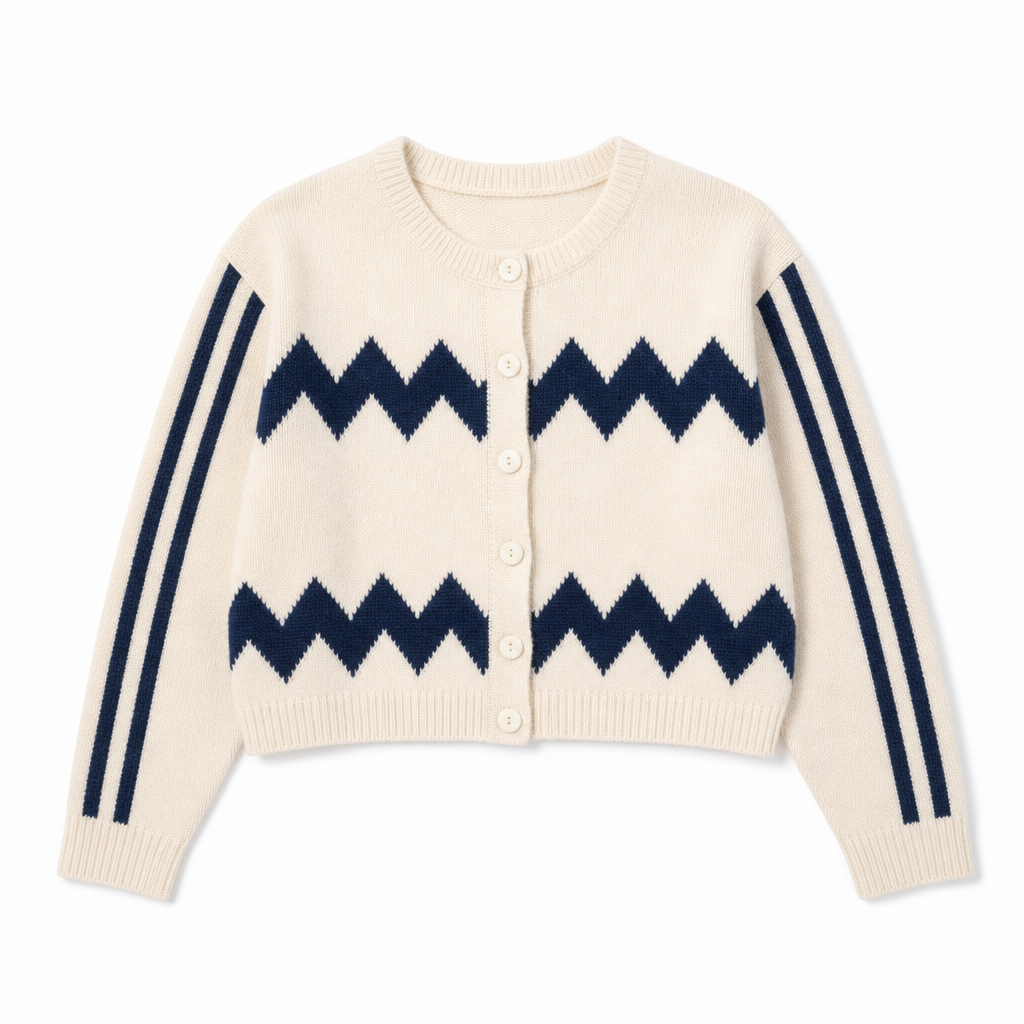
Source image — synthetic unbranded ivory knit cardigan. Reference checks: two navy zigzag bands, two navy stripes per sleeve, six ivory buttons, cropped silhouette.
I reviewed each output against four questions:
- Are the two navy zigzag bands still recognizable as the same product pattern?
- Are two navy stripes still present on each visible sleeve?
- Does the visible button/closure treatment remain commercially compatible with the source?
- Did the model introduce an unrequested garment or styling choice that changes the listing interpretation?
This is intentionally a product-identity review, not a photorealism score. A close crop may make the full button count impossible to verify; that is recorded as an observability limit, rather than being called a pass.
Task 1: Can a catalog cardigan survive a front-facing try-on?
The first prompt asked for a front-facing studio try-on with light-blue jeans and no accessories or extra garments. This task tests silhouette, full-pattern placement, sleeve treatment, and whether the original closure is preserved when the garment moves onto a person.
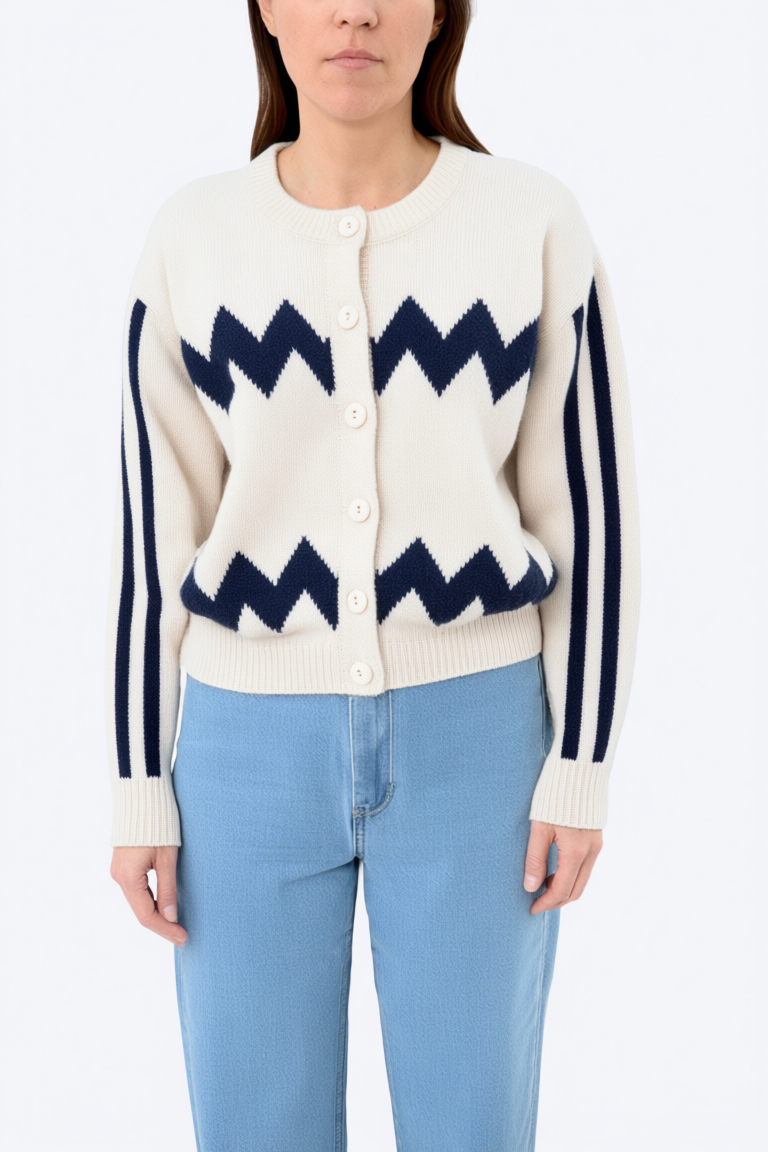
Qwen Image Edit — studio try-on. The two zigzag bands and sleeve stripes remain prominent; the crop is tighter than the requested full studio outfit.
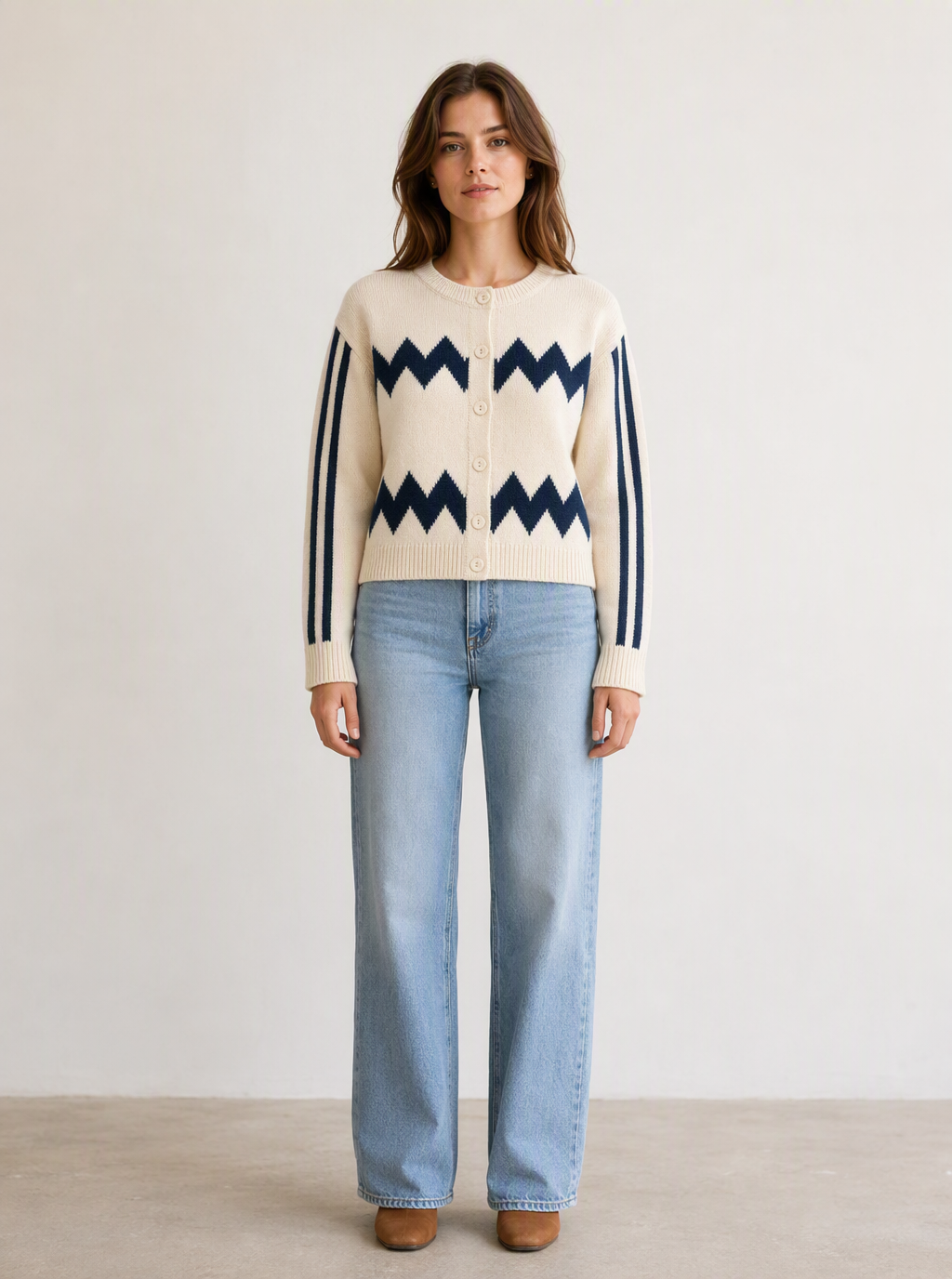
GPT Image 2 — studio try-on. The garment reads consistently, with the pattern, sleeve stripes, and closed front retained in a full-body composition.
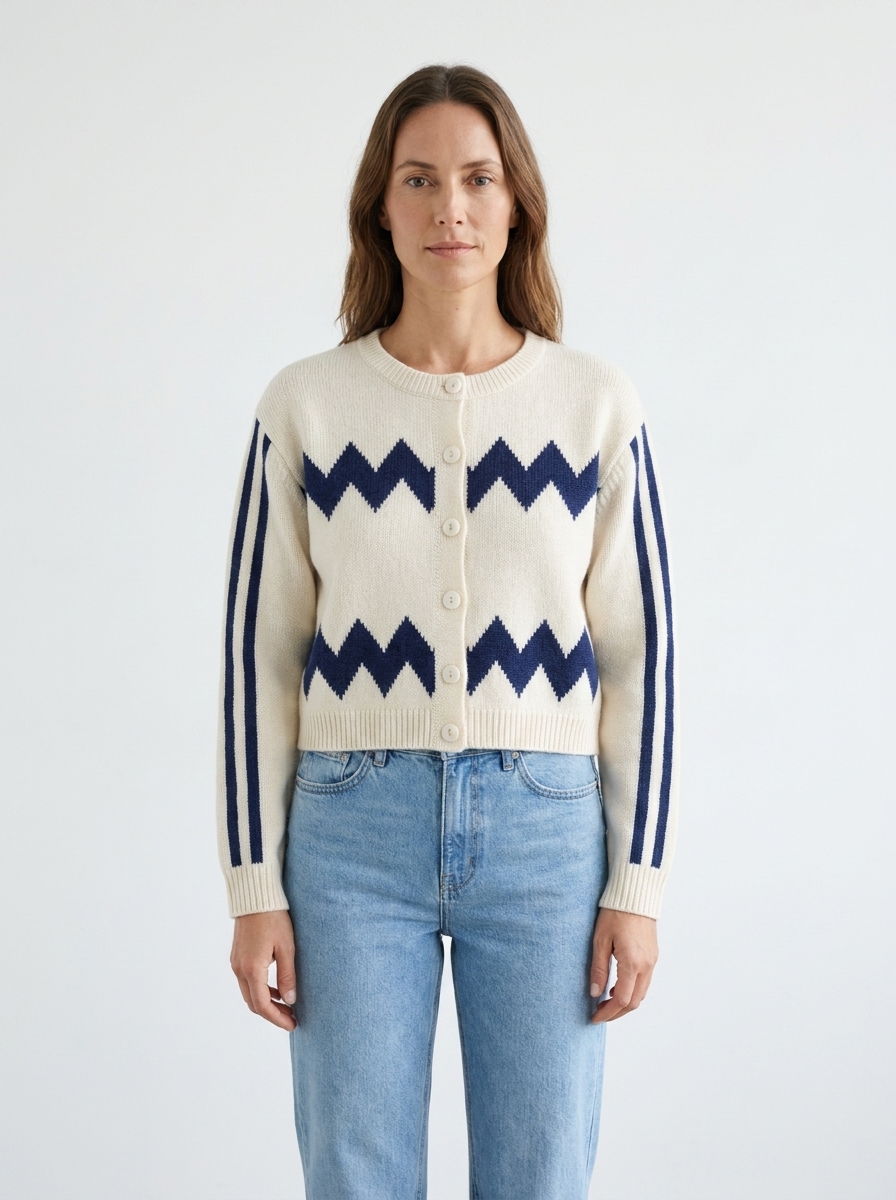
Nano Banana Pro — studio try-on. The repeated pattern and sleeve stripes remain legible; the image is a usable frontal garment check.
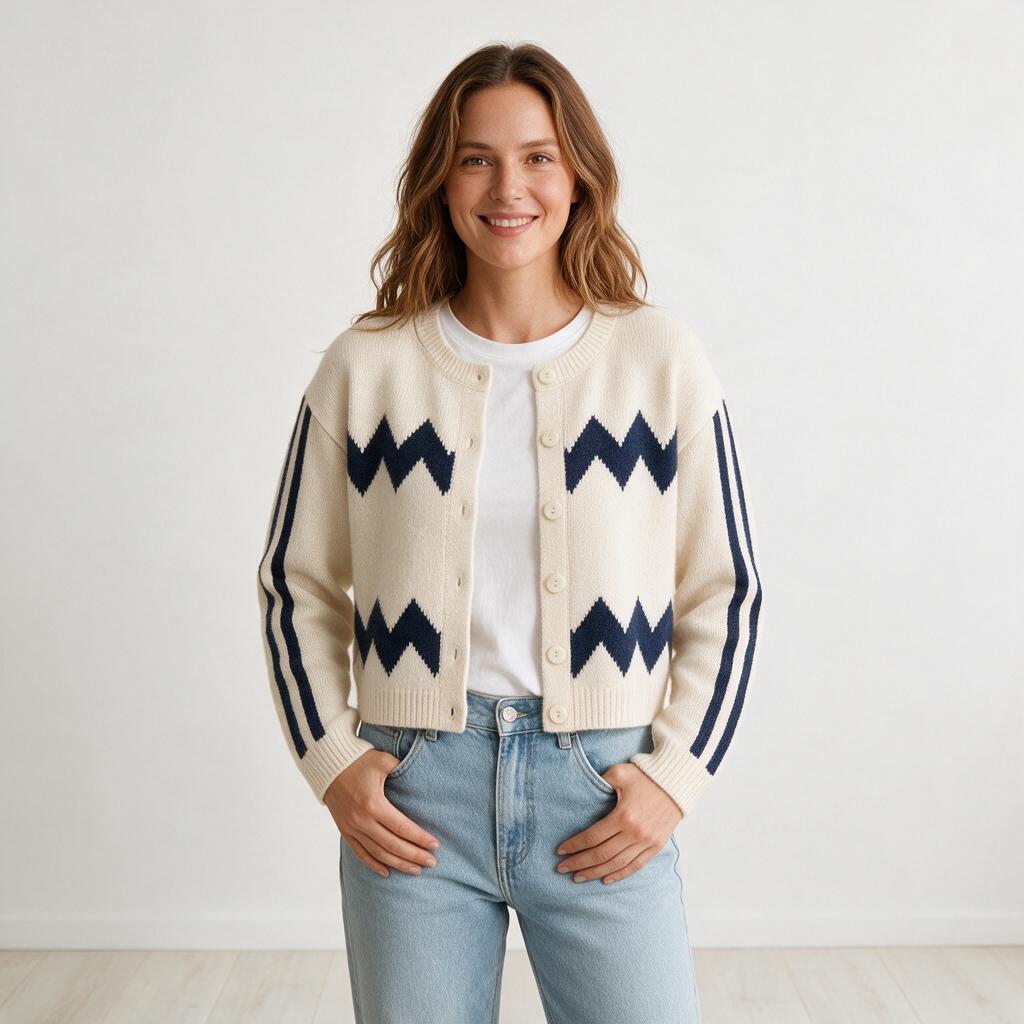
Seedream 5.0 Pro — studio try-on. The key motif survives, but the cardigan is opened and a white T-shirt is introduced despite the no-extra-garment instruction.
The useful result is not that one output looks more editorial. Three of the four outputs retain the closed-cardigan merchandising interpretation. The Seedream example retains the graphic identity, but changes the styling logic: opening the cardigan and inserting a T-shirt changes how a shopper may perceive the product. That makes it a candidate for creative content, not an automatic replacement for a catalog image.
Task 2: What changes when the garment becomes a lifestyle image?
For the second task, the same cardigan had to appear on a seated adult at an outdoor cafe. This is where folds, hands, and a table can hide important product details. The prompt required the front to stay visible and prohibited a scarf, bag, jacket, or covering layer.
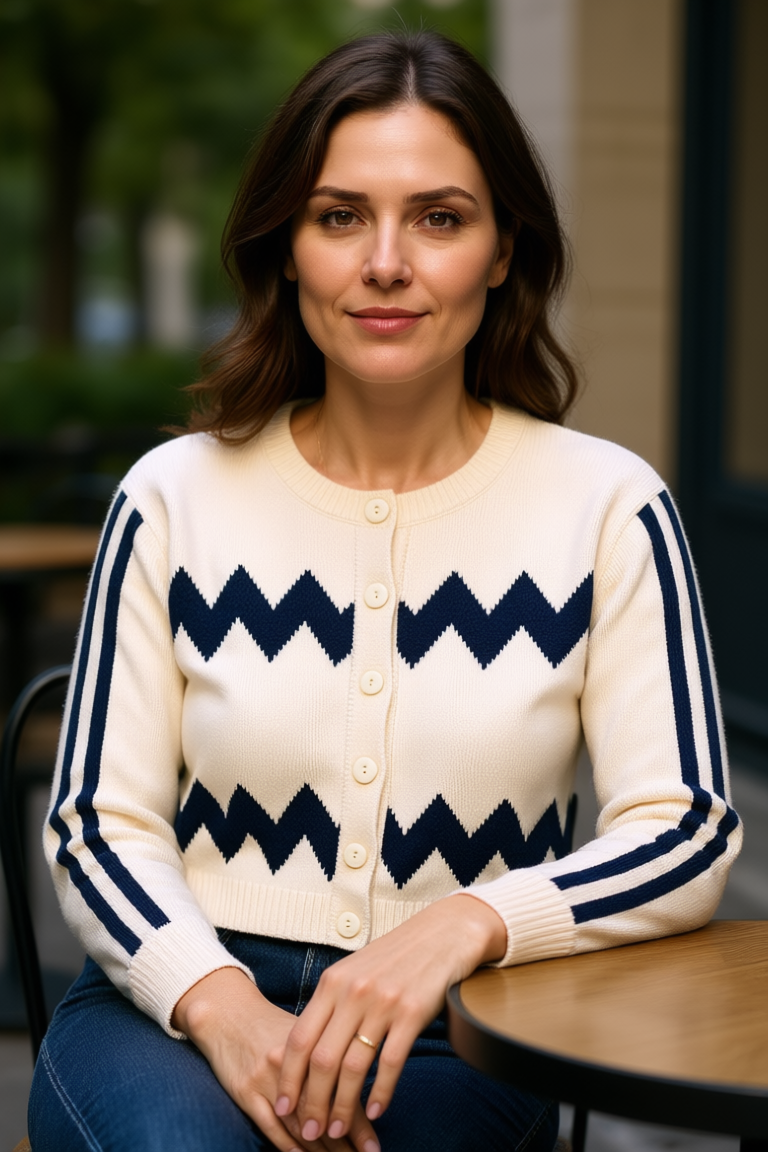
Qwen Image Edit — cafe lifestyle task. The front-facing pattern is still readable despite the seated pose and table.
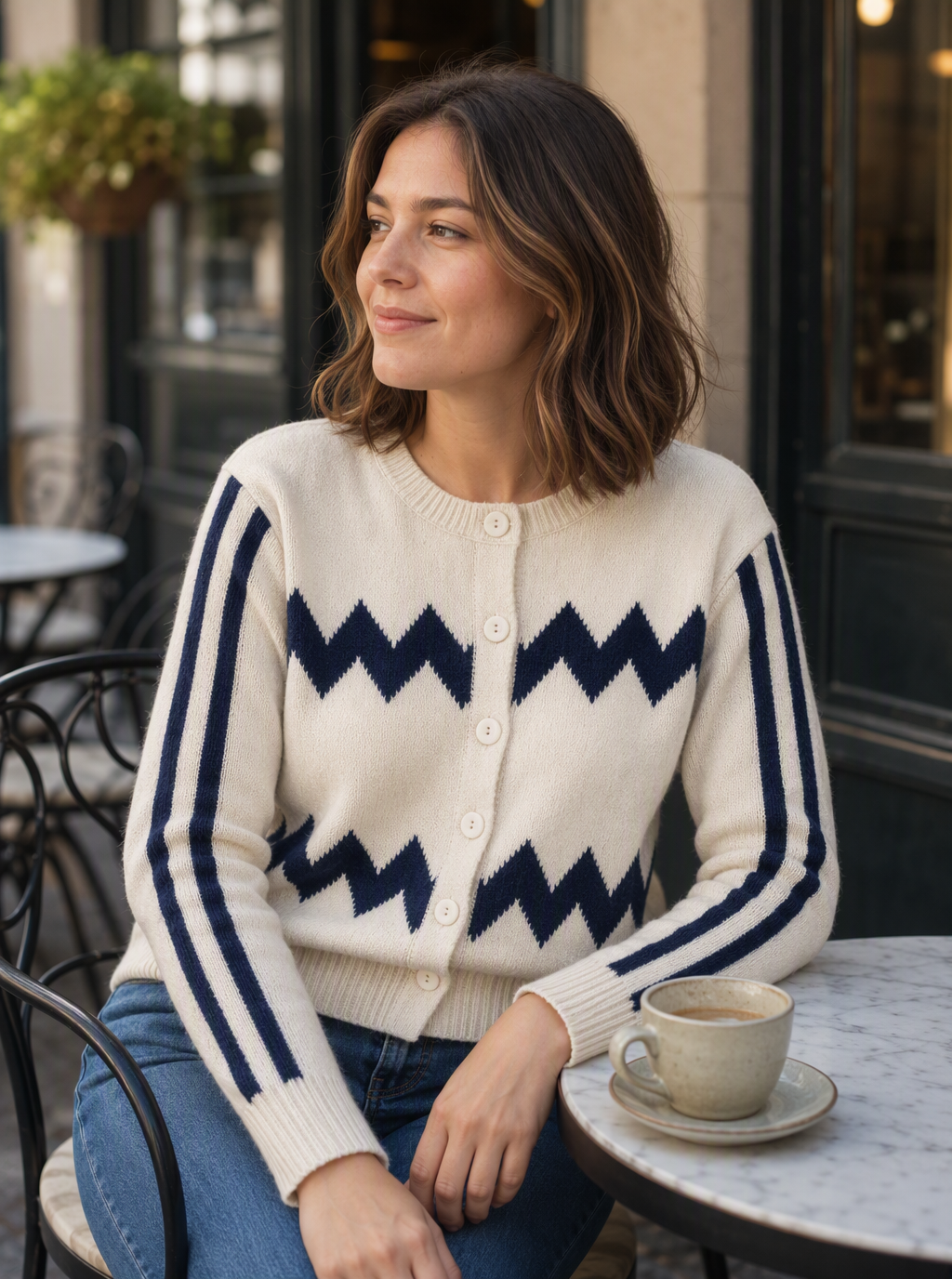
GPT Image 2 — cafe lifestyle task. The two zigzag bands and sleeve stripes remain visually consistent while the body pose changes.
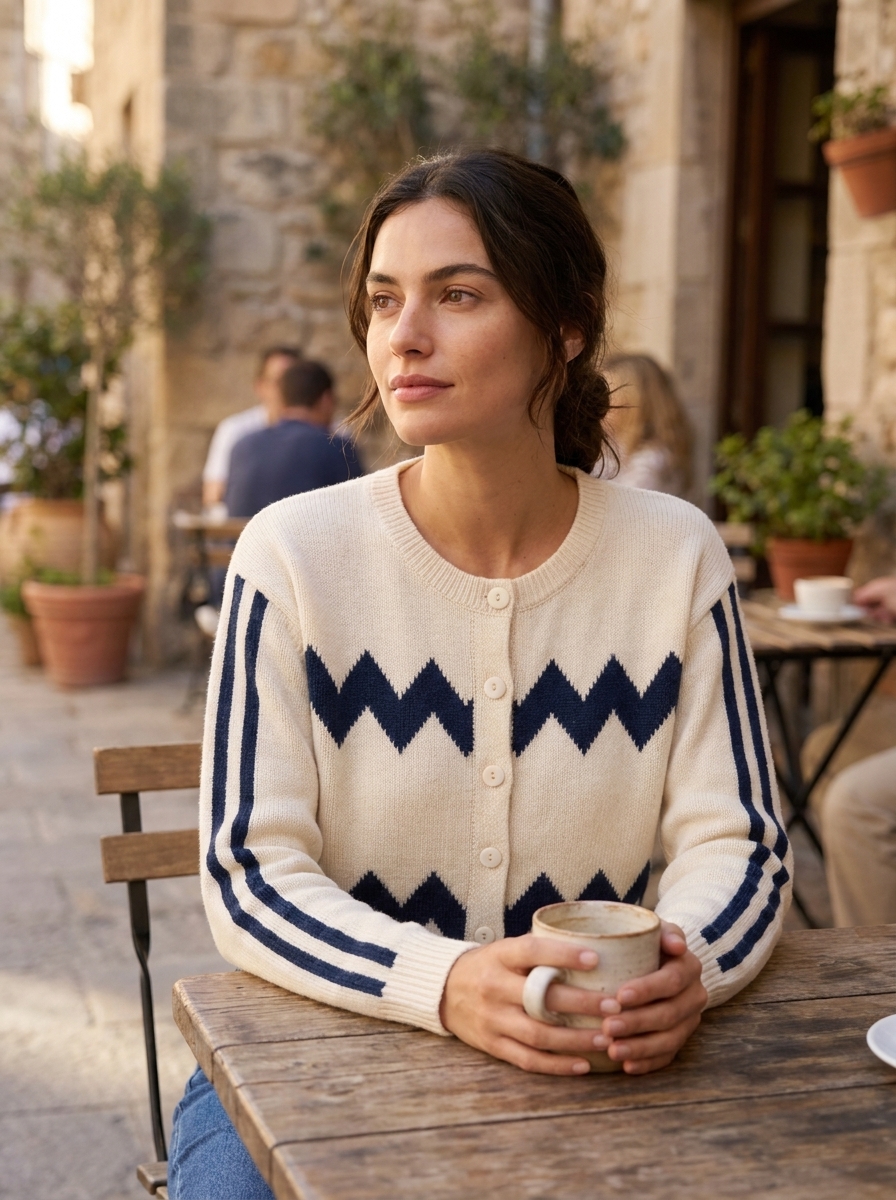
Nano Banana Pro — cafe lifestyle task. The product stays recognizable, though the lower band is partly hidden by the table and hands.

Seedream 5.0 Pro — cafe lifestyle task. The garment identity is maintained, but seated composition makes the closure and full lower pattern harder to audit.
Across the four lifestyle images, the large graphic features held up better than the small construction details. That suggests a practical rule: use a lifestyle generator to sell mood and category recognition, but keep a clean front catalog image where a buyer needs to validate fastening, hem, or exact construction.
Task 3: Is a close crop safer for apparel detail pages?
The final task requested a shoulder-to-waist product-detail image. Close crops are often attractive for knit texture, but they can also remove the evidence needed to validate a SKU. Here, each model preserved the knit surface, navy motif, and visible sleeve stripes well. None, however, presents all six buttons in an audit-friendly way.
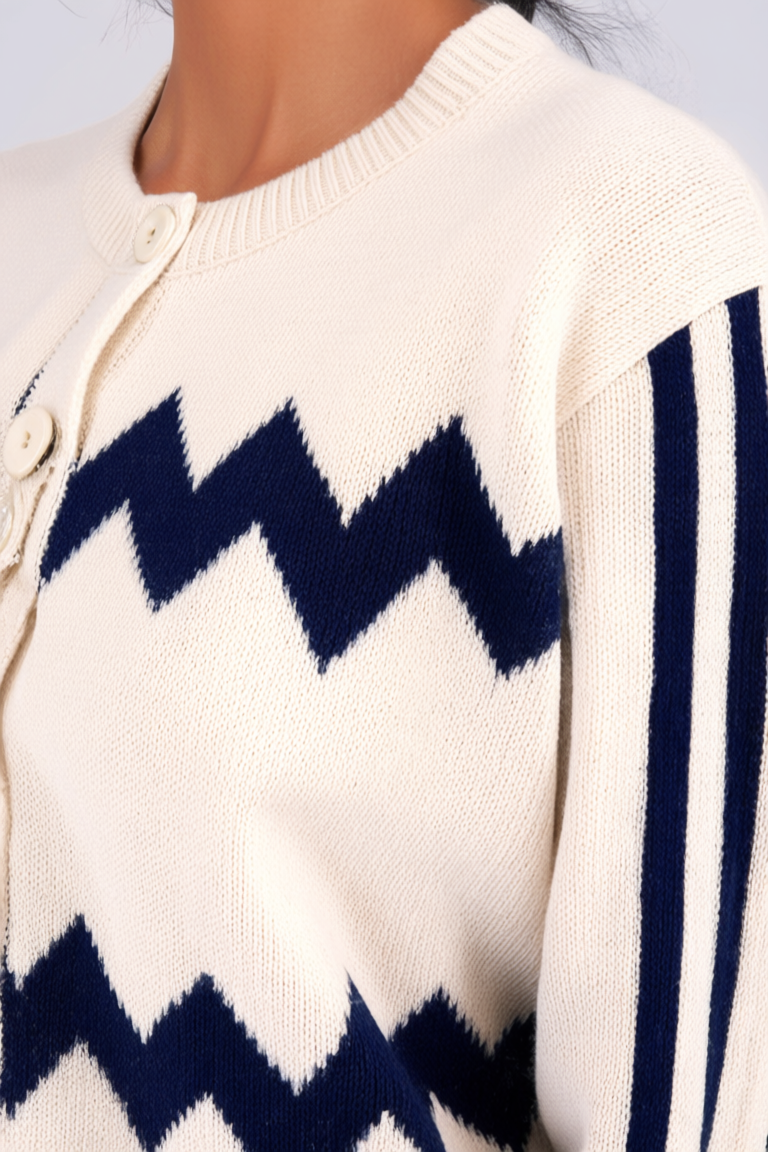
Qwen Image Edit — detail task. The knit texture and upper zigzag motif are clear; cropping prevents a full closure check.
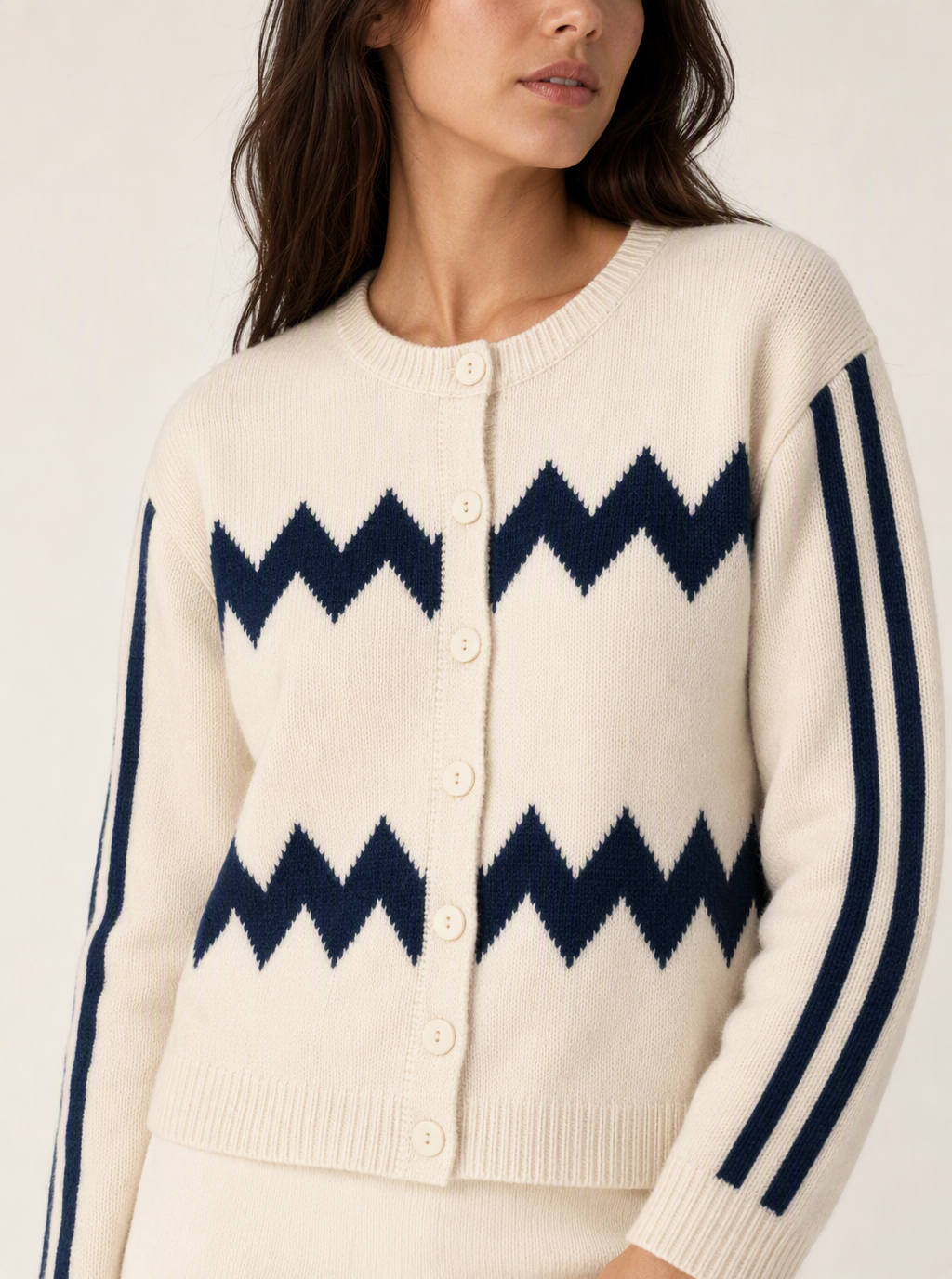
GPT Image 2 — detail task. Both zigzag bands and sleeve stripes read clearly, but the frame is still a merchandising image rather than a complete button-count record.
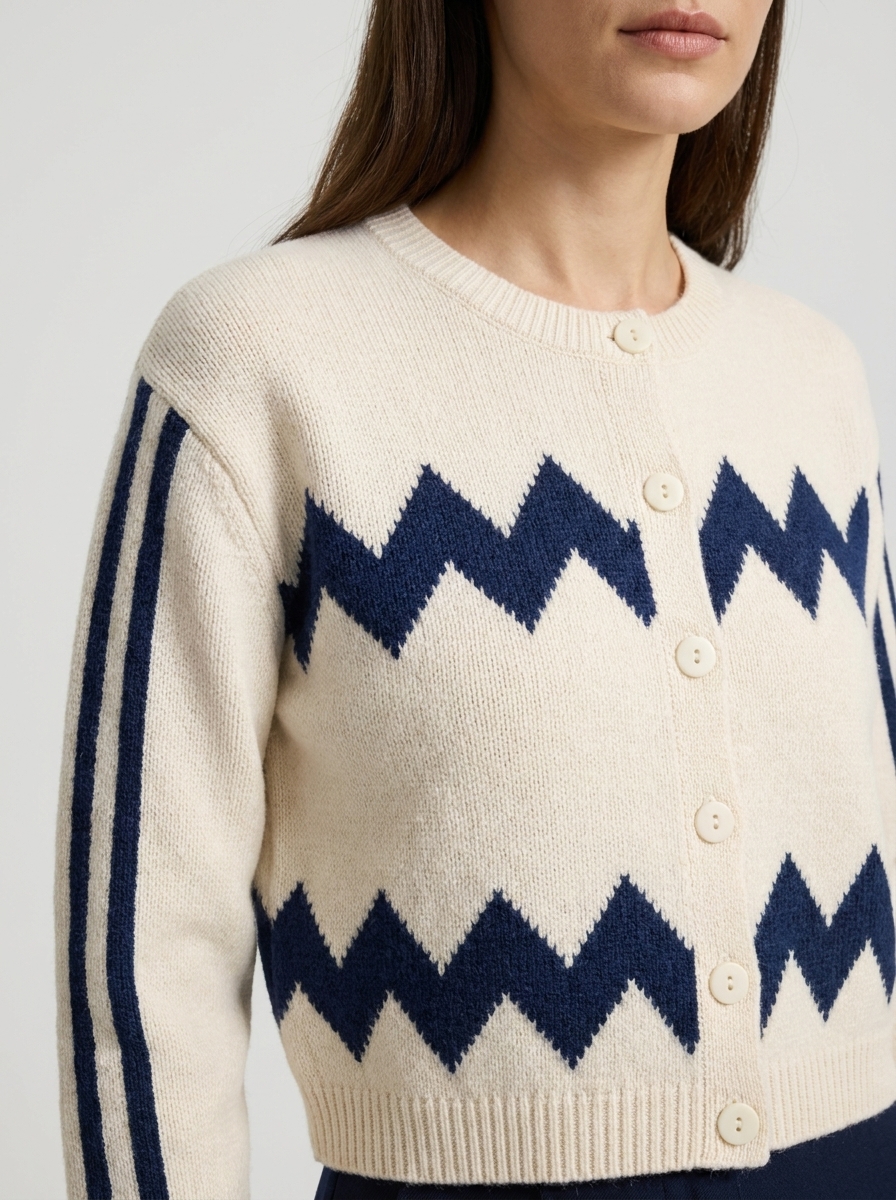
Nano Banana Pro — detail task. The large pattern is consistent; the cropped right edge and partial closure limit SKU-level verification.
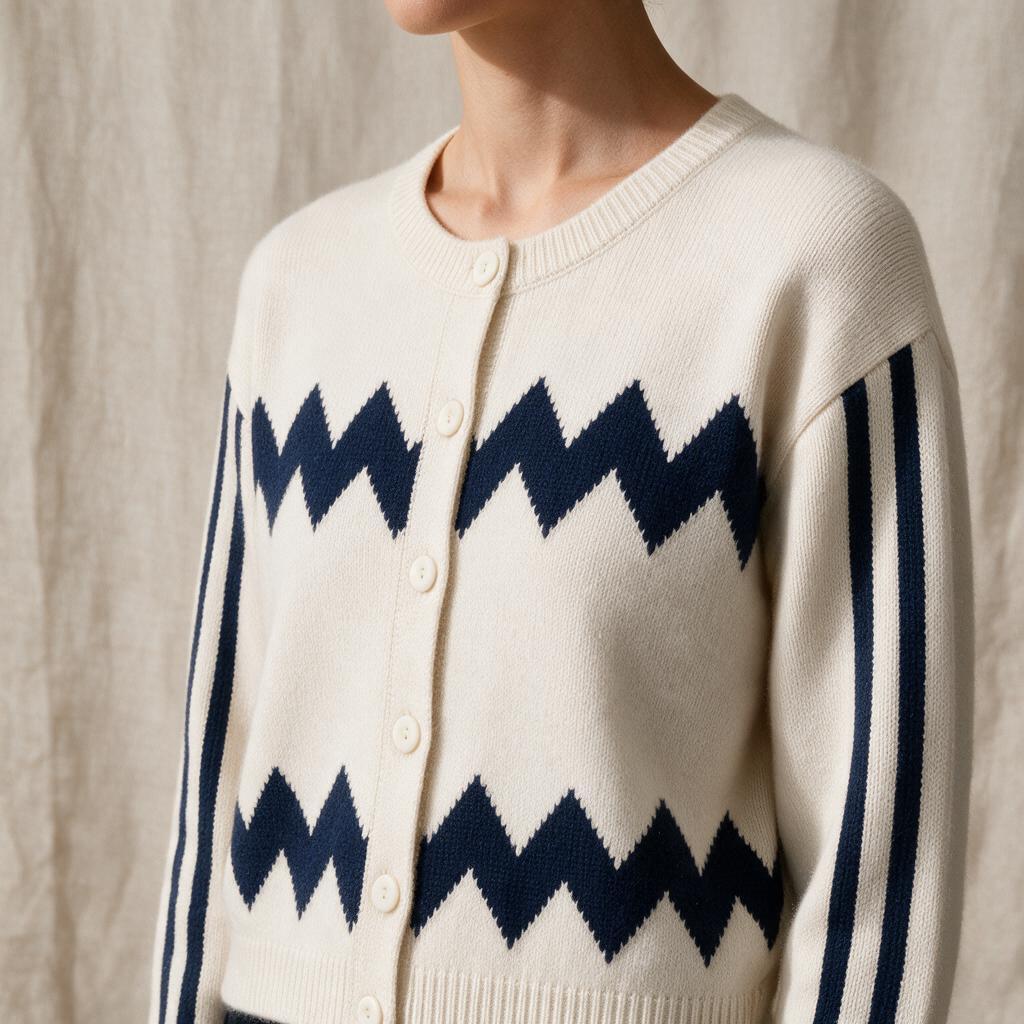
Seedream 5.0 Pro — detail task. Texture, navy motif, and sleeve stripes are clear; a close crop cannot confirm every source construction detail.
The result changes how I would use these assets. Detail crops are appropriate for fabric texture, knit quality, or pattern storytelling. They should not be the only source of truth for a listing with countable elements, even when the crop looks excellent.
What should an apparel team approve before publishing?
This 12-output pilot produced a simple operating checklist. Reviewers do not need to ask whether an image "feels right." They can check whether it still represents the intended product.
| Check | Why it matters | Decision in this pilot |
|---|---|---|
| Major pattern | It is the fastest shopper-recognition cue | All outputs retained the two navy zigzag bands sufficiently for category-level recognition. |
| Sleeve stripes | Repeated features expose geometric drift quickly | The visible sleeves generally kept the two-stripe treatment. |
| Closure state | Open vs. closed changes styling and product interpretation | One studio output introduced an open cardigan and a T-shirt; it needs human approval. |
| Countable details | Buttons, pockets, and fasteners can affect returns | Close crops were not sufficient to verify every button. Keep a catalog reference frame. |
| Composition | A good crop can still hide selling details | Lifestyle and detail images are complementary assets, not substitutes for a source-of-truth product shot. |
The most important lesson from this experiment is that apparel fidelity has levels. A model can be trustworthy for visual identity while still needing review for merchandising truth. That makes a single approval rule too crude. Teams should label each generated image by intended use: creative, lifestyle, detail, or catalog candidate.
A lightweight protocol for the next apparel SKU
For a production test, I would use at least two outputs per model-task cell and use a real, rights-cleared product reference. The review sheet should include product-specific constraints, such as exact pocket count, collar shape, hem length, embroidery spelling, print repeat, and closure state. One output per cell is enough to find failure modes; it is not enough to estimate a reliable failure rate.
The next category should not be another cardigan. Footwear would shift the checks to pair symmetry, sole geometry, and left/right consistency. Jewelry would test stone count, clasp shape, and metal reflections. Furniture would test scale, perspective, and material finish. The method stays stable while the evidence changes with the product.
Conclusion
AI image editing can preserve an apparel product's most obvious identity cues under real merchandising transformations. In this small pilot, all 12 outputs retained the cardigan's large navy pattern and sleeve treatment well enough to be recognized. The harder problem was not aesthetic quality. It was knowing when a styling or framing change made the result unsuitable as a direct SKU representation.
Use generated images to expand the creative set, then retain a deterministic product reference for the facts a shopper must be able to verify.
Disclosure: I work on PixPix, a paid workspace that gives e-commerce teams access to multiple image and video models. The prompts, source asset, and outputs in this post were produced for this independent pilot. This article is not sponsored by any model provider.