new

Get trending papers in your email inbox!

Subscribe

Daily Papers

byAK and the research community

Feb 4

User-Oriented Multi-Turn Dialogue Generation with Tool Use at scale

The recent paradigm shift toward large reasoning models (LRMs) as autonomous agents has intensified the demand for sophisticated, multi-turn tool-use capabilities. Yet, existing datasets and data-generation approaches are limited by static, predefined toolsets that cannot scale to the complexity of open-ended human-agent collaboration. To address this, we initially developed a framework for automated task-oriented multi-turn dialogue generation at scale, utilizing an LRM-based simulator to dynamically generate high-value, domain-specific tools to solve specified tasks. However, we observe that a purely task-oriented design often results in "solely task-solving" trajectories, where the agent completes the objective with minimal interaction, failing to generate the high turn-count conversations seen in realistic scenarios. To bridge this gap, we shift toward a user-oriented simulation paradigm. By decoupling task generation from a dedicated user simulator that mimics human behavioral rules - such as incremental request-making and turn-by-turn feedback - we facilitate more authentic, extended multi-turn dialogues that reflect the iterative nature of real-world problem solving. Our generation pipeline operates as a versatile, plug-and-play module capable of initiating generation from any state, ensuring high scalability in producing extended tool-use data. Furthermore, by facilitating multiple task completions within a single trajectory, it yields a high-density dataset that reflects the multifaceted demands of real-world human-agent interaction.

upstage upstage
·
Jan 13 3

Re$^3$Dial: Retrieve, Reorganize and Rescale Dialogue Corpus for Long-Turn Open-Domain Dialogue Pre-training

Large-scale open-domain dialogue data crawled from public social media has greatly improved the performance of dialogue models. However, long-turn dialogues are still highly scarce. Specifically, most dialogue sessions in existing corpora have less than three turns. To alleviate this issue, we propose the Retrieve, Reorganize and Rescale framework (Re^3Dial), which can automatically construct a billion-scale long-turn dialogue corpus from existing short-turn dialogue data. Re^3Dial first trains an Unsupervised Dense Session Retriever (UDSR) to capture semantic and discourse relationships within multi-turn dialogues for retrieving relevant and coherent sessions. It then reorganizes the short-turn dialogues into long-turn sessions via recursively retrieving and selecting the consecutive sessions with our proposed diversity sampling strategy. Extensive evaluations on multiple multi-turn dialogue benchmarks demonstrate that Re^3Dial consistently and significantly improves the dialogue model's ability to utilize long-term context for modeling multi-turn dialogues across different pre-training settings. Finally, we build a toolkit for efficiently rescaling dialogue corpus with Re^3Dial, which enables us to construct a corpus containing 1B Chinese dialogue sessions with 11.3 turns on average (5X longer than the original EVA corpus). We will release our UDSR model, toolkit, and data for public use.

  • 3 authors
·
May 4, 2023

End-to-end Conversation Modeling Track in DSTC6

End-to-end training of neural networks is a promising approach to automatic construction of dialog systems using a human-to-human dialog corpus. Recently, Vinyals et al. tested neural conversation models using OpenSubtitles. Lowe et al. released the Ubuntu Dialogue Corpus for researching unstructured multi-turn dialogue systems. Furthermore, the approach has been extended to accomplish task oriented dialogs to provide information properly with natural conversation. For example, Ghazvininejad et al. proposed a knowledge grounded neural conversation model [3], where the research is aiming at combining conversational dialogs with task-oriented knowledge using unstructured data such as Twitter data for conversation and Foursquare data for external knowledge.However, the task is still limited to a restaurant information service, and has not yet been tested with a wide variety of dialog tasks. In addition, it is still unclear how to create intelligent dialog systems that can respond like a human agent. In consideration of these problems, we proposed a challenge track to the 6th dialog system technology challenges (DSTC6) using human-to-human dialog data to mimic human dialog behaviors. The focus of the challenge track is to train end-to-end conversation models from human-to-human conversation and accomplish end-to-end dialog tasks in various situations assuming a customer service, in which a system plays a role of human agent and generates natural and informative sentences in response to user's questions or comments given dialog context.

  • 2 authors
·
Jun 22, 2017

Imagination is All You Need! Curved Contrastive Learning for Abstract Sequence Modeling Utilized on Long Short-Term Dialogue Planning

Inspired by the curvature of space-time (Einstein, 1921), we introduce Curved Contrastive Learning (CCL), a novel representation learning technique for learning the relative turn distance between utterance pairs in multi-turn dialogues. The resulting bi-encoder models can guide transformers as a response ranking model towards a goal in a zero-shot fashion by projecting the goal utterance and the corresponding reply candidates into a latent space. Here the cosine similarity indicates the distance/reachability of a candidate utterance toward the corresponding goal. Furthermore, we explore how these forward-entailing language representations can be utilized for assessing the likelihood of sequences by the entailment strength i.e. through the cosine similarity of its individual members (encoded separately) as an emergent property in the curved space. These non-local properties allow us to imagine the likelihood of future patterns in dialogues, specifically by ordering/identifying future goal utterances that are multiple turns away, given a dialogue context. As part of our analysis, we investigate characteristics that make conversations (un)plannable and find strong evidence of planning capability over multiple turns (in 61.56% over 3 turns) in conversations from the DailyDialog (Li et al., 2017) dataset. Finally, we show how we achieve higher efficiency in sequence modeling tasks compared to previous work thanks to our relativistic approach, where only the last utterance needs to be encoded and computed during inference.

  • 3 authors
·
Nov 14, 2022

Beyond Single-Turn: A Survey on Multi-Turn Interactions with Large Language Models

Recent advancements in large language models (LLMs) have revolutionized their ability to handle single-turn tasks, yet real-world applications demand sophisticated multi-turn interactions. This survey provides a comprehensive review of recent advancements in evaluating and enhancing multi-turn interactions in LLMs. Focusing on task-specific scenarios, from instruction following in diverse domains such as math and coding to complex conversational engagements in roleplay, healthcare, education, and even adversarial jailbreak settings, we systematically examine the challenges of maintaining context, coherence, fairness, and responsiveness over prolonged dialogues. The paper organizes current benchmarks and datasets into coherent categories that reflect the evolving landscape of multi-turn dialogue evaluation. In addition, we review a range of enhancement methodologies under multi-turn settings, including model-centric strategies (contextual learning, supervised fine-tuning, reinforcement learning, and new architectures), external integration approaches (memory-augmented, retrieval-based methods, and knowledge graph), and agent-based techniques for collaborative interactions. Finally, we discuss open challenges and propose future directions for research to further advance the robustness and effectiveness of multi-turn interactions in LLMs. Related resources and papers are available at https://github.com/yubol-cmu/Awesome-Multi-Turn-LLMs.

  • 7 authors
·
Apr 7, 2025

LoopServe: An Adaptive Dual-phase LLM Inference Acceleration System for Multi-Turn Dialogues

Multi-turn dialogues are essential in many real-world applications of large language models, such as chatbots and virtual assistants. As conversation histories become longer, existing large language models face increasing computational and memory challenges, which hinder their ability to provide efficient and responsive interactions. Most current acceleration methods either compress the context or optimize key value caching, but they often rely on fixed or position-based heuristics that do not adapt well to the dynamic and unpredictable patterns found in actual multi-turn conversations. In this paper, we present LoopServe, an adaptive dual-phase inference acceleration framework for large language models in multi-turn dialogues. LoopServe introduces two main innovations. First, it performs online sparsification during the prefilling phase by dynamically selecting the most important parts of the attention matrix for each new input. Second, it uses progressive key value compression during decoding by adaptively maintaining a relevant and efficient cache based on the most recently generated output tokens. We also propose a https://huggingface.co/datasets/TreeAILab/Multi-turn_Long-context_Benchmark_for_LLMs{new benchmark} with eleven multi-turn datasets that reflect realistic query positions and conversational dependencies. Extensive experiments demonstrate that LoopServe consistently achieves superior effectiveness compared to existing baselines and significantly accelerates LLM inference across a wide range of long-context dialogue tasks.

  • 12 authors
·
Jul 18, 2025

DeepDialogue: A Multi-Turn Emotionally-Rich Spoken Dialogue Dataset

Recent advances in conversational AI have demonstrated impressive capabilities in single-turn responses, yet multi-turn dialogues remain challenging for even the most sophisticated language models. Current dialogue datasets are limited in their emotional range, domain diversity, turn depth, and are predominantly text-only, hindering progress in developing more human-like conversational systems across modalities. To address these limitations, we present DeepDialogue, a large-scale multimodal dataset containing 40,150 high-quality multi-turn dialogues spanning 41 domains and incorporating 20 distinct emotions with coherent emotional progressions. Our approach pairs 9 different language models (4B-72B parameters) to generate 65,600 initial conversations, which we then evaluate through a combination of human annotation and LLM-based quality filtering. The resulting dataset reveals fundamental insights: smaller models fail to maintain coherence beyond 6 dialogue turns; concrete domains (e.g., "cars," "travel") yield more meaningful conversations than abstract ones (e.g., "philosophy"); and cross-model interactions produce more coherent dialogues than same-model conversations. A key contribution of DeepDialogue is its speech component, where we synthesize emotion-consistent voices for all 40,150 dialogues, creating the first large-scale open-source multimodal dialogue dataset that faithfully preserves emotional context across multi-turn conversations.

  • 3 authors
·
May 26, 2025

Multi-turn Response Selection with Commonsense-enhanced Language Models

As a branch of advanced artificial intelligence, dialogue systems are prospering. Multi-turn response selection is a general research problem in dialogue systems. With the assistance of background information and pre-trained language models, the performance of state-of-the-art methods on this problem gains impressive improvement. However, existing studies neglect the importance of external commonsense knowledge. Hence, we design a Siamese network where a pre-trained Language model merges with a Graph neural network (SinLG). SinLG takes advantage of Pre-trained Language Models (PLMs) to catch the word correlations in the context and response candidates and utilizes a Graph Neural Network (GNN) to reason helpful common sense from an external knowledge graph. The GNN aims to assist the PLM in fine-tuning, and arousing its related memories to attain better performance. Specifically, we first extract related concepts as nodes from an external knowledge graph to construct a subgraph with the context response pair as a super node for each sample. Next, we learn two representations for the context response pair via both the PLM and GNN. A similarity loss between the two representations is utilized to transfer the commonsense knowledge from the GNN to the PLM. Then only the PLM is used to infer online so that efficiency can be guaranteed. Finally, we conduct extensive experiments on two variants of the PERSONA-CHAT dataset, which proves that our solution can not only improve the performance of the PLM but also achieve an efficient inference.

  • 6 authors
·
Jul 25, 2024

Recent Advances in Deep Learning Based Dialogue Systems: A Systematic Survey

Dialogue systems are a popular natural language processing (NLP) task as it is promising in real-life applications. It is also a complicated task since many NLP tasks deserving study are involved. As a result, a multitude of novel works on this task are carried out, and most of them are deep learning based due to the outstanding performance. In this survey, we mainly focus on the deep learning based dialogue systems. We comprehensively review state-of-the-art research outcomes in dialogue systems and analyze them from two angles: model type and system type. Specifically, from the angle of model type, we discuss the principles, characteristics, and applications of different models that are widely used in dialogue systems. This will help researchers acquaint these models and see how they are applied in state-of-the-art frameworks, which is rather helpful when designing a new dialogue system. From the angle of system type, we discuss task-oriented and open-domain dialogue systems as two streams of research, providing insight into the hot topics related. Furthermore, we comprehensively review the evaluation methods and datasets for dialogue systems to pave the way for future research. Finally, some possible research trends are identified based on the recent research outcomes. To the best of our knowledge, this survey is the most comprehensive and up-to-date one at present for deep learning based dialogue systems, extensively covering the popular techniques. We speculate that this work is a good starting point for academics who are new to the dialogue systems or those who want to quickly grasp up-to-date techniques in this area.

  • 5 authors
·
May 10, 2021

MT-Eval: A Multi-Turn Capabilities Evaluation Benchmark for Large Language Models

Large language models (LLMs) are increasingly relied upon for complex multi-turn conversations across diverse real-world applications. However, existing benchmarks predominantly focus on single-turn evaluations, overlooking the models' capabilities in multi-turn interactions. To address this gap, we introduce MT-Eval, a comprehensive benchmark designed to evaluate multi-turn conversational abilities. By analyzing human-LLM conversations, we categorize interaction patterns into four types: recollection, expansion, refinement, and follow-up. We construct multi-turn queries for each category either by augmenting existing datasets or by creating new examples with GPT-4 to avoid data leakage. To study the factors impacting multi-turn abilities, we create single-turn versions of the 1170 multi-turn queries and compare performance. Our evaluation of 11 well-known LLMs shows that while closed-source models generally surpass open-source ones, certain open-source models exceed GPT-3.5-Turbo in specific tasks. We observe significant performance degradation in multi-turn settings compared to single-turn settings in most models, which is not correlated with the models' fundamental capabilities. Moreover, we identify the distance to relevant content and susceptibility to error propagation as the key factors influencing multi-turn performance. MT-Eval is released publicly to encourage future research towards more robust conversational models.

  • 9 authors
·
Jan 29, 2024 2

Learning to Detect Relevant Contexts and Knowledge for Response Selection in Retrieval-based Dialogue Systems

Recently, knowledge-grounded conversations in the open domain gain great attention from researchers. Existing works on retrieval-based dialogue systems have paid tremendous efforts to utilize neural networks to build a matching model, where all of the context and knowledge contents are used to match the response candidate with various representation methods. Actually, different parts of the context and knowledge are differentially important for recognizing the proper response candidate, as many utterances are useless due to the topic shift. Those excessive useless information in the context and knowledge can influence the matching process and leads to inferior performance. To address this problem, we propose a multi-turn Response Selection Model that can Detect the relevant parts of the Context and Knowledge collection (RSM-DCK). Our model first uses the recent context as a query to pre-select relevant parts of the context and knowledge collection at the word-level and utterance-level semantics. Further, the response candidate interacts with the selected context and knowledge collection respectively. In the end, The fused representation of the context and response candidate is utilized to post-select the relevant parts of the knowledge collection more confidently for matching. We test our proposed model on two benchmark datasets. Evaluation results indicate that our model achieves better performance than the existing methods, and can effectively detect the relevant context and knowledge for response selection.

  • 5 authors
·
Sep 26, 2025

RAD-Bench: Evaluating Large Language Models Capabilities in Retrieval Augmented Dialogues

In real-world applications with Large Language Models (LLMs), external retrieval mechanisms - such as Search-Augmented Generation (SAG), tool utilization, and Retrieval-Augmented Generation (RAG) - are often employed to enhance the quality of augmented generations in dialogues. These approaches often come with multi-turn dialogue, where each interaction is enriched by relevant information retrieved from external sources. Existing benchmarks either assess LLMs' chat abilities in multi-turn dialogues or their use of retrieval for augmented responses in single-turn settings. However, there is a gap in evaluating LLMs' ability to leverage retrieval for more precise responses across multiple turns. To address this limitation, we introduce RAD-Bench (Retrieval Augmented Dialogue), a benchmark designed to evaluate LLMs' capabilities in multi-turn dialogues following retrievals, essential for their deployment in context-rich applications. RAD-Bench evaluates two key abilities of LLMs: Retrieval Synthesis and Retrieval Reasoning. These are measured using discriminative questions and retrieved contexts, and corresponding reference answers, assessing how effectively LLMs integrate and reason with context to maintain and enhance conversation quality over multiple turns. Our evaluation results on commonly used LLMs reveal that model performance deteriorates as additional layers of conditions or constraints are applied across conversation turns, even when accurate retrieved contexts are provided. The data and code are available at https://github.com/mtkresearch/RAD-Bench

  • 6 authors
·
Sep 19, 2024

Test-Time Scaling Strategies for Generative Retrieval in Multimodal Conversational Recommendations

The rapid evolution of e-commerce has exposed the limitations of traditional product retrieval systems in managing complex, multi-turn user interactions. Recent advances in multimodal generative retrieval -- particularly those leveraging multimodal large language models (MLLMs) as retrievers -- have shown promise. However, most existing methods are tailored to single-turn scenarios and struggle to model the evolving intent and iterative nature of multi-turn dialogues when applied naively. Concurrently, test-time scaling has emerged as a powerful paradigm for improving large language model (LLM) performance through iterative inference-time refinement. Yet, its effectiveness typically relies on two conditions: (1) a well-defined problem space (e.g., mathematical reasoning), and (2) the model's ability to self-correct -- conditions that are rarely met in conversational product search. In this setting, user queries are often ambiguous and evolving, and MLLMs alone have difficulty grounding responses in a fixed product corpus. Motivated by these challenges, we propose a novel framework that introduces test-time scaling into conversational multimodal product retrieval. Our approach builds on a generative retriever, further augmented with a test-time reranking (TTR) mechanism that improves retrieval accuracy and better aligns results with evolving user intent throughout the dialogue. Experiments across multiple benchmarks show consistent improvements, with average gains of 14.5 points in MRR and 10.6 points in nDCG@1.

  • 9 authors
·
Aug 25, 2025

Raw Text is All you Need: Knowledge-intensive Multi-turn Instruction Tuning for Large Language Model

Instruction tuning as an effective technique aligns the outputs of large language models (LLMs) with human preference. But how to generate the seasonal multi-turn dialogues from raw documents for instruction tuning still requires further exploration. In this paper, we present a novel framework named R2S that leverages the CoD-Chain of Dialogue logic to guide large language models (LLMs) in generating knowledge-intensive multi-turn dialogues for instruction tuning. By integrating raw documents from both open-source datasets and domain-specific web-crawled documents into a benchmark K-BENCH, we cover diverse areas such as Wikipedia (English), Science (Chinese), and Artifacts (Chinese). Our approach first decides the logic flow of the current dialogue and then prompts LLMs to produce key phrases for sourcing relevant response content. This methodology enables the creation of the G I NSTRUCT instruction dataset, retaining raw document knowledge within dialoguestyle interactions. Utilizing this dataset, we fine-tune GLLM, a model designed to transform raw documents into structured multi-turn dialogues, thereby injecting comprehensive domain knowledge into the SFT model for enhanced instruction tuning. This work signifies a stride towards refining the adaptability and effectiveness of LLMs in processing and generating more accurate, contextually nuanced responses across various fields.

  • 11 authors
·
Jul 3, 2024 2

WavChat: A Survey of Spoken Dialogue Models

Recent advancements in spoken dialogue models, exemplified by systems like GPT-4o, have captured significant attention in the speech domain. Compared to traditional three-tier cascaded spoken dialogue models that comprise speech recognition (ASR), large language models (LLMs), and text-to-speech (TTS), modern spoken dialogue models exhibit greater intelligence. These advanced spoken dialogue models not only comprehend audio, music, and other speech-related features, but also capture stylistic and timbral characteristics in speech. Moreover, they generate high-quality, multi-turn speech responses with low latency, enabling real-time interaction through simultaneous listening and speaking capability. Despite the progress in spoken dialogue systems, there is a lack of comprehensive surveys that systematically organize and analyze these systems and the underlying technologies. To address this, we have first compiled existing spoken dialogue systems in the chronological order and categorized them into the cascaded and end-to-end paradigms. We then provide an in-depth overview of the core technologies in spoken dialogue models, covering aspects such as speech representation, training paradigm, streaming, duplex, and interaction capabilities. Each section discusses the limitations of these technologies and outlines considerations for future research. Additionally, we present a thorough review of relevant datasets, evaluation metrics, and benchmarks from the perspectives of training and evaluating spoken dialogue systems. We hope this survey will contribute to advancing both academic research and industrial applications in the field of spoken dialogue systems. The related material is available at https://github.com/jishengpeng/WavChat.

  • 19 authors
·
Nov 14, 2024

Parrot: Enhancing Multi-Turn Chat Models by Learning to Ask Questions

Impressive progress has been made on chat models based on Large Language Models (LLMs) recently; however, there is a noticeable lag in multi-turn conversations between open-source chat models (e.g., Alpaca and Vicuna) and the leading chat models (e.g., ChatGPT and GPT-4). Through a series of analyses, we attribute the lag to the lack of enough high-quality multi-turn instruction-tuning data. The available instruction-tuning data for the community are either single-turn conversations or multi-turn ones with certain issues, such as non-human-like instructions, less detailed responses, or rare topic shifts. In this paper, we address these challenges by introducing Parrot, a highly scalable solution designed to automatically generate high-quality instruction-tuning data, which are then used to enhance the effectiveness of chat models in multi-turn conversations. Specifically, we start by training the Parrot-Ask model, which is designed to emulate real users in generating instructions. We then utilize Parrot-Ask to engage in multi-turn conversations with ChatGPT across a diverse range of topics, resulting in a collection of 40K high-quality multi-turn dialogues (Parrot-40K). These data are subsequently employed to train a chat model that we have named Parrot-Chat. We demonstrate that the dialogues gathered from Parrot-Ask markedly outperform existing multi-turn instruction-following datasets in critical metrics, including topic diversity, number of turns, and resemblance to human conversation. With only 40K training examples, Parrot-Chat achieves strong performance against other 13B open-source models across a range of instruction-following benchmarks, and particularly excels in evaluations of multi-turn capabilities. We make all codes, datasets, and two versions of the Parrot-Ask model based on LLaMA2-13B and KuaiYii-13B available at https://github.com/kwai/KwaiYii/Parrot.

  • 8 authors
·
Oct 11, 2023

When F1 Fails: Granularity-Aware Evaluation for Dialogue Topic Segmentation

Dialogue topic segmentation supports summarization, retrieval, memory management, and conversational continuity. Despite decades of prior work, evaluation practice in dialogue topic segmentation remains dominated by strict boundary matching and F1-based metrics, even as modern LLM-based conversational systems increasingly rely on segmentation to manage conversation history beyond the model's fixed context window, where unstructured context accumulation degrades efficiency and coherence. This paper introduces an evaluation objective for dialogue topic segmentation that treats boundary density and segment coherence as primary criteria, alongside window-tolerant F1 (W-F1). Through extensive cross-dataset empirical evaluation, we show that reported performance differences across dialogue segmentation benchmarks are driven not by model quality, but by annotation granularity mismatches and sparse boundary labels. This indicates that many reported improvements arise from evaluation artifacts rather than improved boundary detection. We evaluated multiple, structurally distinct dialogue segmentation strategies across eight dialogue datasets spanning task-oriented, open-domain, meeting-style, and synthetic interactions. Across these settings, we observe high segment coherence combined with extreme oversegmentation relative to sparse labels, producing misleadingly low exact-match F1 scores. We show that topic segmentation is best understood as selecting an appropriate granularity rather than predicting a single correct boundary set. We operationalize this view by explicitly separating boundary scoring from boundary selection.

  • 1 authors
·
Dec 18, 2025

A Few-Shot Semantic Parser for Wizard-of-Oz Dialogues with the Precise ThingTalk Representation

Previous attempts to build effective semantic parsers for Wizard-of-Oz (WOZ) conversations suffer from the difficulty in acquiring a high-quality, manually annotated training set. Approaches based only on dialogue synthesis are insufficient, as dialogues generated from state-machine based models are poor approximations of real-life conversations. Furthermore, previously proposed dialogue state representations are ambiguous and lack the precision necessary for building an effective agent. This paper proposes a new dialogue representation and a sample-efficient methodology that can predict precise dialogue states in WOZ conversations. We extended the ThingTalk representation to capture all information an agent needs to respond properly. Our training strategy is sample-efficient: we combine (1) fewshot data sparsely sampling the full dialogue space and (2) synthesized data covering a subset space of dialogues generated by a succinct state-based dialogue model. The completeness of the extended ThingTalk language is demonstrated with a fully operational agent, which is also used in training data synthesis. We demonstrate the effectiveness of our methodology on MultiWOZ 3.0, a reannotation of the MultiWOZ 2.1 dataset in ThingTalk. ThingTalk can represent 98% of the test turns, while the simulator can emulate 85% of the validation set. We train a contextual semantic parser using our strategy, and obtain 79% turn-by-turn exact match accuracy on the reannotated test set.

MultiVerse: A Multi-Turn Conversation Benchmark for Evaluating Large Vision and Language Models

Vision-and-Language Models (VLMs) have shown impressive capabilities on single-turn benchmarks, yet real-world applications often demand more intricate multi-turn dialogues. Existing multi-turn datasets (e.g, MMDU, ConvBench) only partially capture the breadth and depth of conversational scenarios encountered by users. In this work, we introduce MultiVerse, a novel multi-turn conversation benchmark featuring 647 dialogues - each averaging four turns - derived from a diverse set of 12 popular VLM evaluation benchmarks. With 484 tasks and 484 interaction goals, MultiVerse covers a wide range of topics, from factual knowledge and perception to advanced reasoning tasks such as mathematics and coding. To facilitate robust assessment, we propose a checklist-based evaluation method that leverages GPT-4o as the automated evaluator, measuring performance across 37 key aspects, including perceptual accuracy, linguistic clarity, and factual correctness. We evaluate 18 VLMs on MultiVerse, revealing that even the strongest models (e.g., GPT-4o) achieve only a 50% success rate in complex multi-turn conversations, highlighting the dataset's challenging nature. Notably, we find that providing full dialogue context significantly enhances performance for smaller or weaker models, emphasizing the importance of in-context learning. We believe MultiVerse is a landscape of evaluating multi-turn interaction abilities for VLMs.

KAIST
·
Oct 18, 2025 2

IMAD: IMage-Augmented multi-modal Dialogue

Currently, dialogue systems have achieved high performance in processing text-based communication. However, they have not yet effectively incorporated visual information, which poses a significant challenge. Furthermore, existing models that incorporate images in dialogue generation focus on discussing the image itself. Our proposed approach presents a novel perspective on multi-modal dialogue systems, which interprets the image in the context of the dialogue. By doing so, we aim to expand the capabilities of current dialogue systems and transition them from single modality (text) to multi-modality. However, there is a lack of validated English datasets that contain both images and dialogue contexts for this task. Thus, we propose a two-stage approach to automatically construct a multi-modal dialogue dataset. In the first stage, we utilize text-to-image similarity and sentence similarity to identify which utterances could be replaced with an image. In the second stage, we replace those utterances by selecting a subset of relevant images and filtering them with a visual question answering model. We used this approach, along with additional labeling, to create the IMage Augmented multi-modal Dialogue dataset (IMAD), which can serve as a validated dataset for this task. Furthermore, we propose a baseline model trained on this dataset, which outperforms model trained on the same data without images and BlenderBot.

  • 3 authors
·
May 17, 2023

What Do You Want? User-centric Prompt Generation for Text-to-image Synthesis via Multi-turn Guidance

The emergence of text-to-image synthesis (TIS) models has significantly influenced digital image creation by producing high-quality visuals from written descriptions. Yet these models heavily rely on the quality and specificity of textual prompts, posing a challenge for novice users who may not be familiar with TIS-model-preferred prompt writing. Existing solutions relieve this via automatic model-preferred prompt generation from user queries. However, this single-turn manner suffers from limited user-centricity in terms of result interpretability and user interactivity. To address these issues, we propose DialPrompt, a multi-turn dialogue-based TIS prompt generation model that emphasises user-centricity. DialPrompt is designed to follow a multi-turn guidance workflow, where in each round of dialogue the model queries user with their preferences on possible optimization dimensions before generating the final TIS prompt. To achieve this, we mined 15 essential dimensions for high-quality prompts from advanced users and curated a multi-turn dataset. Through training on this dataset, DialPrompt can improve interpretability by allowing users to understand the correlation between specific phrases and image attributes. Additionally, it enables greater user control and engagement in the prompt generation process, leading to more personalized and visually satisfying outputs. Experiments indicate that DialPrompt achieves a competitive result in the quality of synthesized images, outperforming existing prompt engineering approaches by 5.7%. Furthermore, in our user evaluation, DialPrompt outperforms existing approaches by 46.5% in user-centricity score and is rated 7.9/10 by 19 human reviewers.

  • 12 authors
·
Aug 23, 2024

MultiWOZ 2.1: A Consolidated Multi-Domain Dialogue Dataset with State Corrections and State Tracking Baselines

MultiWOZ 2.0 (Budzianowski et al., 2018) is a recently released multi-domain dialogue dataset spanning 7 distinct domains and containing over 10,000 dialogues. Though immensely useful and one of the largest resources of its kind to-date, MultiWOZ 2.0 has a few shortcomings. Firstly, there is substantial noise in the dialogue state annotations and dialogue utterances which negatively impact the performance of state-tracking models. Secondly, follow-up work (Lee et al., 2019) has augmented the original dataset with user dialogue acts. This leads to multiple co-existent versions of the same dataset with minor modifications. In this work we tackle the aforementioned issues by introducing MultiWOZ 2.1. To fix the noisy state annotations, we use crowdsourced workers to re-annotate state and utterances based on the original utterances in the dataset. This correction process results in changes to over 32% of state annotations across 40% of the dialogue turns. In addition, we fix 146 dialogue utterances by canonicalizing slot values in the utterances to the values in the dataset ontology. To address the second problem, we combined the contributions of the follow-up works into MultiWOZ 2.1. Hence, our dataset also includes user dialogue acts as well as multiple slot descriptions per dialogue state slot. We then benchmark a number of state-of-the-art dialogue state tracking models on the MultiWOZ 2.1 dataset and show the joint state tracking performance on the corrected state annotations. We are publicly releasing MultiWOZ 2.1 to the community, hoping that this dataset resource will allow for more effective models across various dialogue subproblems to be built in the future.

  • 10 authors
·
Jul 2, 2019

Regressing the Relative Future: Efficient Policy Optimization for Multi-turn RLHF

Large Language Models (LLMs) have achieved remarkable success at tasks like summarization that involve a single turn of interaction. However, they can still struggle with multi-turn tasks like dialogue that require long-term planning. Previous works on multi-turn dialogue extend single-turn reinforcement learning from human feedback (RLHF) methods to the multi-turn setting by treating all prior dialogue turns as a long context. Such approaches suffer from covariate shift: the conversations in the training set have previous turns generated by some reference policy, which means that low training error may not necessarily correspond to good performance when the learner is actually in the conversation loop. In response, we introduce REgressing the RELative FUture (REFUEL), an efficient policy optimization approach designed to address multi-turn RLHF in LLMs. REFUEL employs a single model to estimate Q-values and trains on self-generated data, addressing the covariate shift issue. REFUEL frames the multi-turn RLHF problem as a sequence of regression tasks on iteratively collected datasets, enabling ease of implementation. Theoretically, we prove that REFUEL can match the performance of any policy covered by the training set. Empirically, we evaluate our algorithm by using Llama-3.1-70B-it to simulate a user in conversation with our model. REFUEL consistently outperforms state-of-the-art methods such as DPO and REBEL across various settings. Furthermore, despite having only 8 billion parameters, Llama-3-8B-it fine-tuned with REFUEL outperforms Llama-3.1-70B-it on long multi-turn dialogues. Implementation of REFUEL can be found at https://github.com/ZhaolinGao/REFUEL/, and models trained by REFUEL can be found at https://huggingface.co/Cornell-AGI.

  • 7 authors
·
Oct 6, 2024

DiaSynth -- Synthetic Dialogue Generation Framework

The scarcity of domain specific dialogue datasets across various domains, from academic topics to everyday conversations, limits the development of dialogue systems for various applications. Existing research is often constrained either by dialogue datasets that are too general or by niche domain dialogue datasets whose scale does not match the required scale for training dialogue systems. To address this gap, we introduce DiaSynth - a synthetic dialogue generation framework capable of generating high quality, contextually rich dialogues across a wide range of domains. Our approach differs from existing frameworks by dynamically generating dialogues that incorporate simulated personas, subtopics, and diverse conversational characteristics, using a Large Language Model (LLM) with Chain of Thought (CoT) reasoning to create contextually rich, domain-specific dialogues that closely mimic natural human interactions. DiaSynth produces tailored dialogues that emulate realistic conversations. We perform our experiments by generating synthetic data using different LLMs and few-shot examples from DialogSum and SAMSum. The pretrained language models fine-tuned on the synthetic data outperform the base models by 16.47%, while the comparison between models fine-tuned on in-domain data and synthetic data shows that the synthetic data is able to capture 90.48% of the distribution of the in-domain data. The quality of the data generated also scales with the size of LLMs. These results validate DiaSynth's potential as a robust alternative to traditional data collection methods.

  • 4 authors
·
Sep 25, 2024 3

ToolDial: Multi-turn Dialogue Generation Method for Tool-Augmented Language Models

Tool-Augmented Language Models (TALMs) leverage external APIs to answer user queries across various domains. However, existing benchmark datasets for TALM research often feature simplistic dialogues that do not reflect real-world scenarios, such as the need for models to ask clarifying questions or proactively call additional APIs when essential information is missing. To address these limitations, we construct and release ToolDial, a dataset comprising 11,111 multi-turn dialogues, with an average of 8.95 turns per dialogue, based on APIs from RapidAPI. ToolDial has two key characteristics. First, the dialogues incorporate 16 user and system actions (e.g., "Request", "Clarify", "Fail inform") to capture the rich dynamics of real-world interactions. Second, we simulate dialogues where the system requests necessary information from the user based on API documentation and seeks additional APIs if the user fails to provide the required information. To facilitate this process, we introduce a method for generating an API graph that represents input and output compatibility between APIs. Using ToolDial, we evaluate a suite of language models on their ability to predict correct actions and extract input parameter values for API calls from the dialogue history. Modern language models achieve accuracy scores below 70%, indicating substantial room for improvement. We release our dataset and code at https://github.com/holi-lab/ToolDial.

  • 4 authors
·
Mar 1, 2025

Reasoning or Not? A Comprehensive Evaluation of Reasoning LLMs for Dialogue Summarization

Dialogue summarization is a challenging task with significant practical value in customer service, meeting analysis, and conversational AI. Although large language models (LLMs) have achieved substantial progress in summarization tasks, the performance of step-by-step reasoning architectures-specifically Long Chain-of-Thought (CoT) implementations such as OpenAI-o1 and DeepSeek-R1-remains unexplored for dialogue scenarios requiring concurrent abstraction and conciseness. In this work, we present the first comprehensive and systematic evaluation of state-of-the-art reasoning LLMs and non-reasoning LLMs across three major paradigms-generic, role-oriented, and query-oriented dialogue summarization. Our study spans diverse languages, domains, and summary lengths, leveraging strong benchmarks (SAMSum, DialogSum, CSDS, and QMSum) and advanced evaluation protocols that include both LLM-based automatic metrics and human-inspired criteria. Contrary to trends in other reasoning-intensive tasks, our findings show that explicit stepwise reasoning does not consistently improve dialogue summarization quality. Instead, reasoning LLMs are often prone to verbosity, factual inconsistencies, and less concise summaries compared to their non-reasoning counterparts. Through scenario-specific analyses and detailed case studies, we further identify when and why explicit reasoning may fail to benefit-or even hinder-summarization in complex dialogue contexts. Our work provides new insights into the limitations of current reasoning LLMs and highlights the need for targeted modeling and evaluation strategies for real-world dialogue summarization.

  • 7 authors
·
Jul 2, 2025

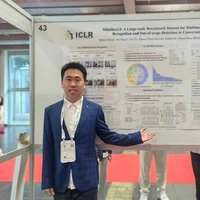
MIntRec2.0: A Large-scale Benchmark Dataset for Multimodal Intent Recognition and Out-of-scope Detection in Conversations

Multimodal intent recognition poses significant challenges, requiring the incorporation of non-verbal modalities from real-world contexts to enhance the comprehension of human intentions. Existing benchmark datasets are limited in scale and suffer from difficulties in handling out-of-scope samples that arise in multi-turn conversational interactions. We introduce MIntRec2.0, a large-scale benchmark dataset for multimodal intent recognition in multi-party conversations. It contains 1,245 dialogues with 15,040 samples, each annotated within a new intent taxonomy of 30 fine-grained classes. Besides 9,304 in-scope samples, it also includes 5,736 out-of-scope samples appearing in multi-turn contexts, which naturally occur in real-world scenarios. Furthermore, we provide comprehensive information on the speakers in each utterance, enriching its utility for multi-party conversational research. We establish a general framework supporting the organization of single-turn and multi-turn dialogue data, modality feature extraction, multimodal fusion, as well as in-scope classification and out-of-scope detection. Evaluation benchmarks are built using classic multimodal fusion methods, ChatGPT, and human evaluators. While existing methods incorporating nonverbal information yield improvements, effectively leveraging context information and detecting out-of-scope samples remains a substantial challenge. Notably, large language models exhibit a significant performance gap compared to humans, highlighting the limitations of machine learning methods in the cognitive intent understanding task. We believe that MIntRec2.0 will serve as a valuable resource, providing a pioneering foundation for research in human-machine conversational interactions, and significantly facilitating related applications. The full dataset and codes are available at https://github.com/thuiar/MIntRec2.0.

  • 9 authors
·
Mar 16, 2024